
Pitch deck design services: we write the story, then design the slides
Most deck designers take your slides and make them look better. We start a step earlier, with what the deck has to prove. Our pitch deck design services put a publisher's writers and designers on the same deck, so you get the story, the numbers and the slides in the order investors read them. Western Reflections Publishing is an independent publishing house in Colorado, and we edit a deck the way we edit a book.

We write and design decks for founders raising money, for authors pitching a book to film, TV or media partners, and for nonprofits making their case to funders and boards. You know your business, book or cause. We've spent 30 years cutting long stories down to what a reader will finish.
Pitch decks from $1,600. The quote is free, and asking for one commits you to nothing.
Why good ideas get passed over by weak decks
Many pitch decks get read without the founder in the room. They arrive as a link, often opened on a phone between meetings. When DocSend and Harvard Business School professor Tom Eisenmann studied more than 200 decks from startups raising seed and Series A rounds, investors spent an average of 3 minutes and 44 seconds with each one. If the opening slides don't make the case in that time, the back half never gets read. Weak decks fail in three places, and each can be fixed.
The story problem
A deck is an argument, and plenty of decks never make one. They list features and leave the reader to work out why any of it matters. An investor's first questions go unanswered or come out of order: what's broken, how you fix it, why now and why your team. Each slide can be fine on its own and the deck still falls apart. A common sign is a product screenshot on slide two, before anyone knows what problem the product solves.
The numbers problem
Investors decide whether to trust you on the numbers slides. A market size with no source reads as a guess. A traction slide showing a single month hides the trend that would have impressed. Revenue on slide six doesn't match revenue on slide twelve, and an investor notices. The ask says $500,000 while the use-of-funds chart adds up to $620,000. Then there's the financial slide pasted from a spreadsheet: twelve columns of figures nobody can absorb in a few seconds.
The design problem
Crowded slides, tiny type and colors that wash out on a projector all say this company isn't ready. Design can't rescue a missing story, and a good story still gets lost in a cluttered template. Weak decks usually have all three, which is why we never treat design as a separate job.
What our pitch deck design services include
Your deck may need two of these parts or all five, and we'll tell you which.
Our writers start by mapping the story slide by slide: what each slide has to prove and how it sets up the next, so an investor reaches your ask already persuaded. Then we write the slides. Each headline states its point as a full sentence, so someone who skims only the headlines still gets your case. "The problem" is a label. "Small dairy farms can't afford a vet check on every calf" is a point. Body text is cut to what the slide needs, in your voice, without the inflated language that makes investors skeptical.
Our designers build each slide around its one job. If you already have a logo, fonts and colors, we work inside them. Starting fresh, we'll build a consistent look you can reuse in other documents. If the logo itself is missing, our logo design services can draw one first. Type is large enough to read on a phone, layouts aren't crammed, and text stands out clearly from its background, so nothing disappears on a projector or a cheap laptop screen. The W3C's minimum contrast standard is a good benchmark for how much contrast slide text needs.
We turn market sizing, traction and financial summaries into charts anyone gets at a glance, with a source line under any figure that came from outside your business. We don't invent traction, inflate a market or build projections you haven't given us. A twelve-column forecast can become one chart of revenue by year, with the assumptions in a footnote. For a data-heavy deck, our charts and infographics service can carry the same visual style across your other materials. And when the argument behind the numbers needs more room than a slide gives it, our white paper writing services can build a sourced paper from the same facts.
We can write speaker notes for each slide, so you know what to say while it's on screen and what to save for questions. We also coach delivery: pacing, pauses and the hard questions your slides invite. Ask for them and we'll add them to the scope.
Send us the deck you're using. We'll look it over, say whether it needs a new story, new design or just a tighter order, and quote that. Send the version investors have actually seen, even if you've changed it since.
The slides investors read, in the order they read them
Advice on deck length varies. Guy Kawasaki's 10/20/30 rule says ten slides. DocSend's study found that decks from startups that went on to raise averaged about 19. For a first meeting, somewhere between the two is the usual range. The order below is where we start, because each slide answers the question the one before it raises. Decks for a producer or a funder look different, but the logic holds.
- Title. Your name and one line a stranger understands.
- The problem. Who has it, what it costs them, and proof it's real.
- The solution. What you built or plan to build, and how it removes the problem.
- Why now. What changed to make this the moment.
- Market size. Who could buy, with a source anyone can check.
- Product. How it works, shown in one or two clear visuals.
- Business model. How money comes in, what a customer pays and how often.
- Traction. The trend over time, not a single good month, with the metric that matters most to your model.
- Competition. Who else solves the problem and the specific reason you win.
- Go to market. How you reach customers and what each one costs to win.
- Team. Why these people can build this.
- Financials. Where the numbers are heading, readable in seconds.
- The ask. How much you're raising, what it pays for and what it gets you to.
Emailed deck or presented deck?
An emailed deck has to stand on its own, so it carries a little more text. A deck you present can be lighter, because you carry the explanation, and it can be built from the emailed one. Either way, each slide should make its point in the few seconds it gets, which is why we follow Y Combinator's advice on making slides legible, simple and obvious: big type, one idea per slide, nothing anyone has to decode.
Not sure which slides your round needs? Ask us what your investors will expect to see.
Tell us about the project
Send a few details about pitch deck design services and a person on our team will reply with a fixed quote. You'll know the price before any work begins.
Prefer to talk? Call (336) 565-6915, Monday to Friday, 9am to 5pm Mountain Time.
Who we write and design pitch decks for
An investor, a film producer, a foundation and a sales prospect each open a deck looking for something different, so we choose the slides for that audience.
Pre-seed and seed decks run on promise, early proof and the people, because there's rarely much revenue history yet. We help founders frame the opportunity, explain why now, and present whatever traction exists in its strongest honest light: paying customers, a waitlist, pilot results or letters of intent. We also prepare decks for angel meetings, where you may get even less time. By Series A, investors expect the metrics to carry more of the story, so the traction and financial slides do more of the work.
Making the case for a book is familiar work for a publisher. A producer, studio or media partner wants to see the story at a glance, who it's for and why it would work on screen or in another format. A book deck usually covers the premise in one line, the main characters, the audience, two or three comparable books or films, the author's platform and the format you have in mind, such as a series or a feature. Before you approach the industry, read our guide on how to pitch a story to a studio. When the book needs a script alongside the deck, our screenplay writing team can help.
Funders and boards read decks too. A nonprofit deck has to show the need, the program and the evidence that it works, then say plainly what a gift will change. The ask slide matters as much here as in an investor deck: name the amount and what it pays for, such as a second season of a program or a staff post for a year. When a funder meeting turns into an application, we can write the grant proposal too, from $1,800 per application.
A sales deck has a different job from an investor deck. It leads a prospect from their problem to your solution to a decision, and its last slide tells them exactly what to do next. It often gets forwarded to people who never heard your pitch. When a prospect wants more detail after the meeting, the same story can become a written business proposal.
How we build your deck, in four steps
First we learn the business, the market and the round you're raising, or the audience you're approaching, from you. Then we gather your traction, metrics and existing materials, from an old deck to a business plan or a manuscript. We ask the questions a skeptical investor will ask, because it's far better to find the weak points now than in a meeting.
Next comes the story map, from problem to ask: each slide, its headline and the point it makes. The argument gets settled here, while changing it means moving a line of text. This is also where gaps show up. A traction slide may need a figure you haven't sent yet, or a market claim may need a source. We'll ask for those now, so nobody builds a chart around a number that's still missing.
Our writers draft the slide copy while our designers build the slides, then we send you the deck. Your feedback shapes the revisions. When you change a headline, the chart under it gets checked in the same pass. Three checks worth making on the draft:
- Read only the headlines, in order. They should make your whole case without the rest of the slide.
- Check every figure against your own spreadsheet, since some may have moved.
- Open it on your phone, then ask someone outside the business to explain the company back to you.
Before delivery we read the whole deck cold, as a stranger will, checking the flow, the chart labels, and that every number matches across slides. If the deck is going out by email, any slide that only makes sense with you beside it gets rewritten. Then we hand over the finished files on the agreed date.
Send either one. We'll read it and send back a free quote: what the deck needs, what it costs and when you'd have it. Call (336) 565-6915, Monday to Friday, 9am to 5pm Mountain Time, or email info@westernreflectionspublishing.com.
What a pitch deck costs with us
Our starting price for a pitch deck is $1,600, listed with our other published prices. There's no package to buy: the quote covers the work your deck needs, which is why we look at what you have first. We don't ask for a full project fee up front, and every quote spells out:
- the parts of the deck we'll write and design
- any extras you asked for, such as speaker notes, coaching or a second version
- the delivery date
- when each payment falls due
The $1,600 starting price covers the story, the numbers and the design for a deck we write from your material. When you need only part of a deck, design alone or a rewrite of the story, tell us and the quote will cover just that part.
It's worth knowing which job you're asking for. If investors follow your story but the slides look homemade, that's design. If the slides look fine but nobody reaches the ask convinced, that's the story, and new fonts won't fix it. Plenty of decks need both, and the quote says which parts it covers.
Scope sets the price. These are the things that can move it:
- the number of slides
- how much research the market section needs
- how much of the financial work we build for you, from a finished summary you hand us to slides built from raw figures
- a second version of the deck, one to email and one to present
You know the number before we begin, and if the brief changes we requote rather than invoice the difference.
What a publishing house brings to a pitch deck
We've published books from Lake City, up in Colorado's San Juan Mountains, since 1996, and we work with clients across the United States by email, phone and video. The job hasn't changed in all that time: decide what someone must believe by the last page, and cut everything else.
On a slide, the words and the layout are one decision. A headline is written to fit its slide, and a chart is designed to prove the sentence above it. Our writers and designers work on your deck together, so those choices get made at the same time. If a headline runs to three lines, the writer cuts it; the designer doesn't shrink the type to squeeze it in. If a chart can't prove its headline, one of them changes.
Cutting fixes more decks than redesign does. We ask what each slide is for and remove whatever doesn't serve that job. Three bullet points become one sentence. A chart with six lines becomes the one line that proves the point. Here's the kind of change we mean.
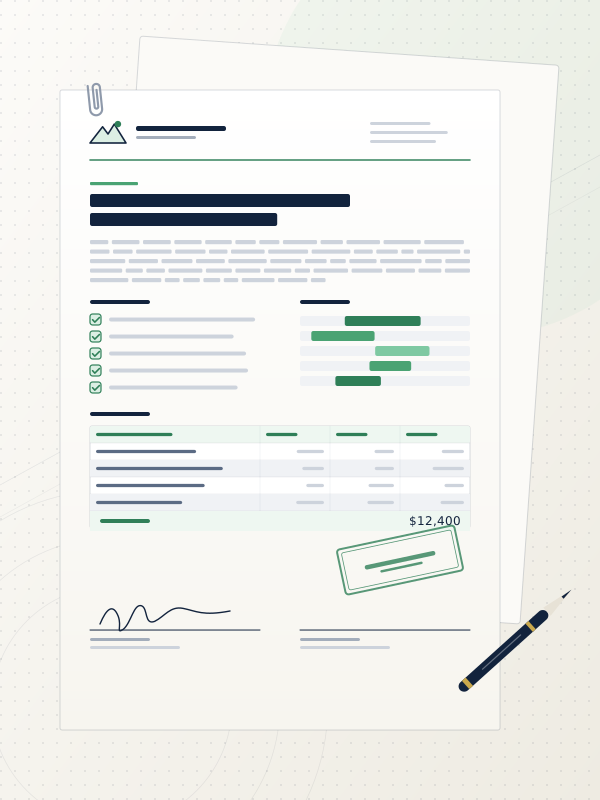
Before: "Our Solution: an AI-powered platform leveraging proprietary data to optimize herd health outcomes."
After: "Dairy farms lose calves to illness that's spotted too late. Our ear tag flags a sick calf days earlier."
The deck and everything in it stay yours, and nothing we sign takes ownership of your work. The fee is fixed, with no hourly billing and no surprise invoice. When a deck isn't something we can do well, we'll say so and explain what it needs instead. Before you decide, you can read what our authors say about working with us.
Pitch deck, business plan or proposal: which do you need?
These documents get confused, and many clients need more than one. A pitch deck is the short visual argument that earns the first meeting. A business plan is the long written case that a lender or investor reads during diligence, and the U.S. Small Business Administration's guide to writing a business plan shows how much more ground it covers. A proposal answers one buyer's specific need. A grant proposal answers a funder's published criteria.
When you need two of these, they should tell the same story with the same numbers. If the deck promises one growth rate and the plan shows another, an investor will flag it early in diligence. Our business plan writing services can produce the full plan from the same facts as your deck. Priced separately at our starting prices, a deck and a business plan come to at least $4,000, and a funder deck with one grant application to at least $3,400. The deck's story can also become a written business proposal or grant proposals written to a funder's criteria, and our brand storytelling work keeps the voice consistent.
Honest answers before you hire us
"Will a better deck get us funded?"
No one can honestly promise that, and we won't. Funding depends on things no deck controls, from the market to the investor across the table. What a clear deck can do is carry an investor all the way to the ask before they decide.
"You're a book publisher. Why would we hire you for a deck?"
Decks are short arguments with pictures, and holding a reader from the first page to the last is a publisher's daily work. The before-and-after slide above shows the kind of change we'd make to yours.
"You won't understand our product."
You'll explain it to us once, the way you would to an investor. If we can't follow it after that call, a busy investor won't either, and that's the first thing we fix. Technical depth can go in an appendix.
"I could use a template or an AI tool."
You can, and for some early conversations that's enough. We'll tell you when yours is one of them. A template gives you a layout. It doesn't give you an argument or decide what to cut.
"A freelancer is cheaper."
Often true, when all you need is design. You'd still have to write the story and shape the numbers yourself, then brief a designer who may never have read a term sheet. Our fee covers the writing too.
"Our numbers are confidential."
They should be, and that's why the NDA is signed before work starts. You can also get a quote without sharing a single figure. Send an outline instead: your stage, how much you're raising, roughly how many slides you expect, and which numbers you'd want charted, such as monthly revenue or active users, with the values left blank.
Questions we get asked
What is a pitch deck?
A short slide presentation making the case for a business, project or book to people who can back it. It covers the problem, the solution, the market, the numbers, the team and the ask, and investors often read it alone, on a phone, before any meeting.
How much do pitch deck design services cost?
Ours start at $1,600 for a deck we write and design. The slide count, the market research and how raw your figures are move it from there. You get one fixed fee once we've seen what you have, and there's no package to buy.
How long does it take to design a pitch deck?
It depends mostly on how much is ready when we start. A deck with a settled story and a finished financial summary needs less work than one built from raw figures. Tell us your meeting date when you ask, and we'll give you a delivery date with the price. If your date isn't realistic, we'll say so before you commit.
How many slides should a pitch deck have?
About 10 to 20 is the usual advice for a first meeting, and the right number is the fewest that make your case. If two slides answer the same question, merge them. If someone would have to ask what a slide is for, cut it.
How is a pitch deck different from a business plan?
Investors usually see the deck first and ask for the plan later, during diligence. So the deck can leave out detail the plan covers, such as full three-year figures. If you need both, we offer business plan writing as well.
Do you write the content, or only design the slides?
Both, or either one. If your story is already settled, we can design alone, or we can rewrite the story for your own designer. Your business figures, such as revenue, users and projections, come from you. Any market figure we research for you carries its source on the slide, so an investor can check it.
Can you redesign a pitch deck I already have?
Yes. Send it with a note on what investors have asked after seeing it. When a deck gets the same question in every meeting, it usually has a slide missing or out of place, which can be a smaller fix than a rebuild.
What do you need from me to start?
A current deck, plan, manuscript or page of notes, plus your latest numbers, your ask, who'll read the deck and your meeting date. Authors can add reviews or sales figures, and nonprofits the funder's guidelines. Sensitive figures can wait.
How do revisions work?
You see the whole deck as a draft, written and designed, and your feedback shapes the revisions. Changes aren't billed by the hour. The price only moves if the brief does, and then you get a new quote, not a bigger invoice. The most useful feedback names the slide and says what it should prove, such as "slide 7 should show we're growing every month," instead of "make it pop."
Do you make pitch decks for authors and nonprofits, not only startups?
Yes, for authors pitching a book to film, TV or media partners and for nonprofits presenting to funders and boards. A producer looks first for the premise and the audience. A funder looks for the need and the evidence.









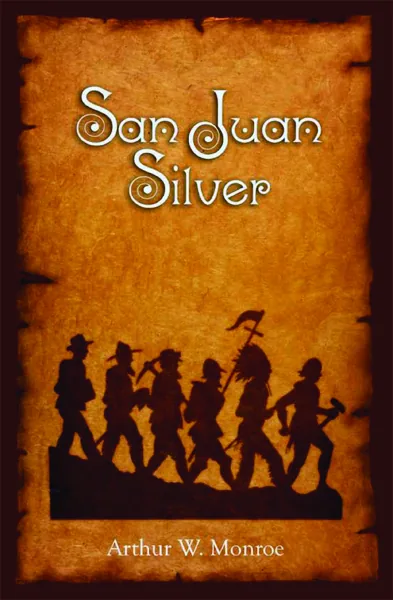
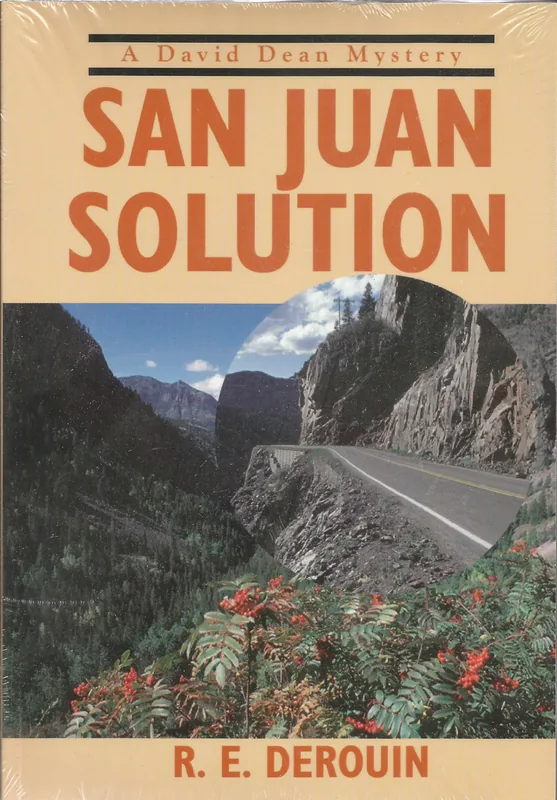
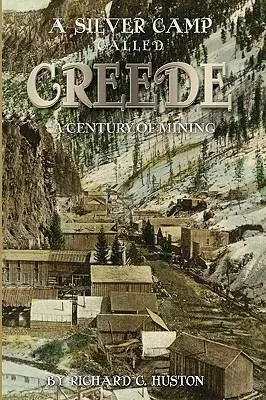
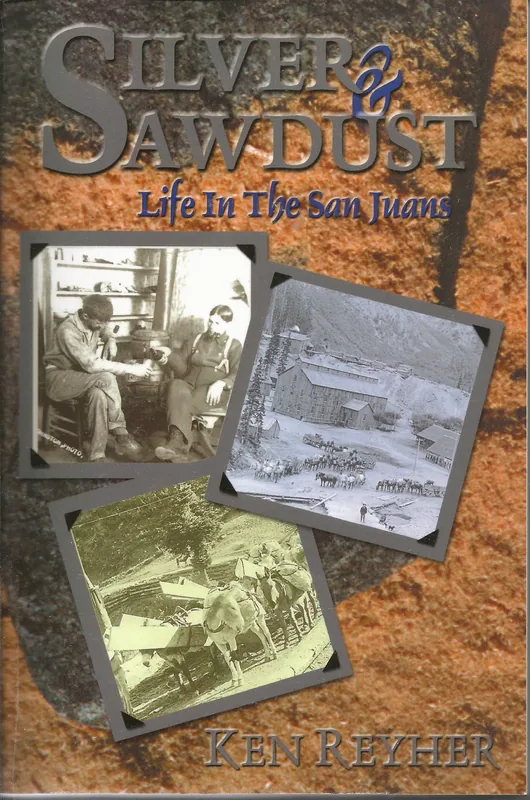
The testimonials of all our wonderful clients
Our clients love to share how it felt to work with us. Here is what some of the authors we have partnered with had to say about the experience.
★★★★★“Working with the Western Reflections Publishing team was a great experience. I came to them with a book idea but needed help structuring it into a finished manuscript. They took the time to learn my objectives right away, communication stayed consistent throughout, and the writers did a great job keeping my voice while improving the structure and flow. I was impressed by how well the finished manuscript reflected my vision.”
Olivia Adams
★★★★★“Western Reflections Publishing took my half-baked idea and turned it into something beautiful. Sarah, my editor, was incredibly patient with me. The cover design team nailed my vision, and the publishing process was smooth. Seeing my book on Amazon is surreal. I'm beyond grateful for their services.”
Amy Tosh
★★★★★“I'm beyond impressed with the editing team at Western Reflections Publishing. They didn't just fix my grammar; they truly understood my voice and helped refine the narrative flow of my book. The transformation from my initial draft to the final version is incredible. If you want your book to stand out, this is the place to go.”
Dakota Bailey
★★★★★“I've published multiple titles, but working with Western Reflections Publishing for my latest release was the smoothest experience yet. From editing to marketing to distribution, their team was professional and responsive. It's clear they truly care about their authors' success, and the best part was that they valued my input and let me take the lead.”
Betty Lentz
★★★★★“I honestly didn't expect the publishing process to feel this smooth, but Western Reflections Publishing made it surprisingly easy. Their editing and formatting teams were thorough and attentive, and they guided me step by step. I felt supported the whole way, which gave me the confidence to finally share my book with the world.”
Caleb Hudson
★★★★★“I was pleasantly surprised by how smooth the process was with Western Reflections Publishing. Their developmental editing brought new clarity to my manuscript, and the formatting team delivered a polished, professional final version. The team's support and clear communication made the entire publishing experience easy to navigate.”
Madison Palmer
Have a deck that's close, or only a page of notes?
Tell us who'll read the deck and when you need it, and you'll hear back what it needs and what it costs. If it's for a book or a funder, say so, because the slide order changes. Asking costs nothing. You'll see the price and the date first, and nothing is chargeable until you say yes.
Every service, in one place
- Ghostwriting Services
- SEO Writing
- Article Writing
- Web Copy Writing
- Press Release
- Script Writing
- Magazine Writing
- Legal Ghostwriting
- Medical Ghostwriters
- Podcast Scriptwriting
- Real Life Story Writing
- Scientific Ghostwriting
- Screenplay Script Writing
- Songwriting Services
- Speech Script Writing
- Technical Ghostwriting
- Twitter Ghostwriting
- Brand Storytelling
- Business Book Writing
- Children’s Book Writing
- Comic Book Writing
- Corporate Writing Services
- Rewriting
- Resume Writing
- Ghostwriting in Arizona
- Ghostwriting in Colorado
- Ghostwriting in Georgia
- Ghostwriting in Illinois
- Ghostwriting in Kansas
- Ghostwriting in Nebraska
- Ghostwriting in New Mexico
- Ghostwriting in New York
- Ghostwriting in North Carolina
- Ghostwriting in Ohio
- Ghostwriting in Oklahoma
- Ghostwriting in Pennsylvania
- Ghostwriting in Texas
- Ghostwriting in Utah
- Ghostwriting in Virginia
- Ghostwriting in Washington