
1Chronicle Books
A San Francisco independent whose reputation rests on physical book design. Publishes illustrated non-fiction, cookery, childrens books and gift books, and takes proposals without an agent.
Submit your manuscript for review. If we love it, we publish it.
Submit manuscript →Format, length, genre fit and what we look for in the first ten pages.
Read the guidelines →California is the second publishing state, and it got there by not competing with New York on New York’s terms. Rather than building general trade houses, the state produced specialists: a design led illustrated publisher in San Francisco, an academic house in Thousand Oaks that came to dominate social science methods, a Berkeley press that made legal self help a category, art publishers in Los Angeles working to museum standards, and a bookshop on Columbus Avenue that changed American obscenity law.
The result is a publishing economy where an author’s realistic options depend heavily on subject. If you are writing an illustrated cookery book, a book about California’s landscape, a technical manual, a psychology workbook or a scholarly monograph, some of the best publishers in the world for that specific thing are in this state and several of them will read a proposal without an agent. The directory below is organised around that reality.
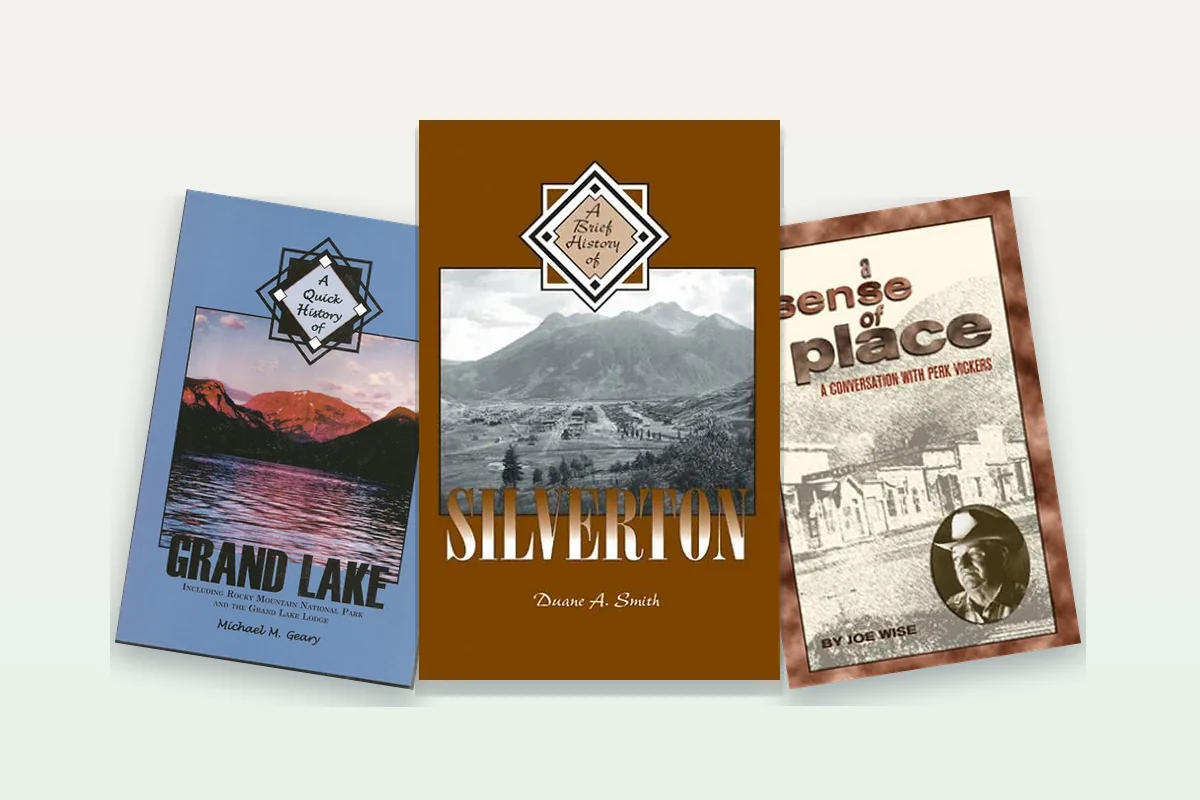
Western Reflections Publishing Company has published from Colorado since 1996 and works with authors across California on regional history, biography, memoir and general non-fiction. Nearly two hundred books are in print, most of them still selling years after publication, which is what a small house can do that a large one cannot.
Every submission is read by a person and answered in writing. Where we would not acquire a manuscript, editing, cover design, formatting, printing and marketing are quoted as fixed fees rather than bundled packages, and the author keeps copyright and every production file.
Listed with the contact details each house publishes itself. A detail we could not confirm is left out rather than guessed.
A San Francisco independent whose reputation rests on physical book design. Publishes illustrated non-fiction, cookery, childrens books and gift books, and takes proposals without an agent.
The publishing arm of the North Beach bookshop founded by Lawrence Ferlinghetti in 1953, and the house that published Ginsbergs Howl and then won the obscenity trial that followed.
A non-profit publishing house and quarterly journal founded by Dave Eggers, known for treating the design of a book or magazine as part of the writing.
An independent technical publisher known for programming, security and hardware books with a sense of humour, and for treating its authors unusually well on royalties.
An independent academic publisher of social science research, journals and textbooks, founded in 1965 and now one of the largest scholarly publishers in the world while remaining independently held.
One of the largest and most influential university presses in the country, publishing across the humanities, social sciences and natural sciences on behalf of the University of California system.
The scholarly press of Stanford University, with particular depth in Asian studies, political science, anthropology and business.
A Berkeley non-profit publisher devoted to California, its landscape, history and native cultures, and one of the few houses whose entire list is bound to a single state.
A Berkeley non-profit publishing health, somatics, ecology, spirituality and martial arts, with a list that reflects the intellectual culture of the East Bay across fifty years.
A literary house publishing fiction, nature writing and essays, with the more experimental Soft Skull Press alongside it. Long associated with west coast literary non-fiction.
An independent business and social change publisher structured as a benefit corporation, with an author community that is unusually involved in how the house is run.
An independent psychology publisher specialising in evidence based self help, and the main trade publisher of workbooks built on cognitive behavioural and acceptance and commitment therapy.
Founded to publish Thich Nhat Hanh, and still the principal English language publisher of his work alongside a wider list on mindfulness and engaged Buddhism.
The pioneer of plain English legal self help publishing, producing guides that let non-lawyers handle wills, patents and small business filings. Founded in Berkeley in 1971.
A small Berkeley house specialising in Japan and East Asia, publishing translated fiction, language guides, design and cultural history.
An independent Berkeley publisher of practical non-fiction covering fitness, health, cookery, games and popular reference.
A radical publisher and distributor putting out political theory, history, fiction and music from an anarchist and left libertarian perspective, with a strong Bay Area backlist.
The definitive publisher of Los Angeles history, architecture and popular culture. Founded in Santa Monica in 1992 and gifted to the Los Angeles Public Library in 2023, where it now publishes as part of the library.
Status update: Acquired by the Los Angeles Public Library under a gift agreement approved in December 2023. Moved from Santa Monica and now publishes from the library as Angel City Press at Los Angeles Public Library.
The publishing arm of the J. Paul Getty Trust, producing art history, conservation science and exhibition catalogues to a standard of production few publishers can match.
The American arm of the German art book publisher, running its West Coast editorial and retail operation from Hollywood. Known for oversized photography and art editions.
A non-profit literary press in Pasadena publishing poetry, fiction and non-fiction, with an active programme of prizes and a long commitment to writers in Los Angeles schools.
An independent Los Angeles house publishing literary fiction and narrative non-fiction, with a deliberate lean toward writers and settings outside the United States.
A Los Angeles independent publishing literary fiction, music writing, crime and Southern California non-fiction, with a list that reflects the city it works in.
The press that introduced French critical theory to an American readership through its Foreign Agents series, and later published Chris Kraus and the Native Agents line of first person writing.
The only American distributor devoted solely to independent literary presses, operating from Berkeley for over half a century. Ceased operations abruptly in March 2024, leaving hundreds of small presses to find new distribution.
Status update: Ceased operations in March 2024 after fifty five years. Its closure disrupted distribution for several hundred independent literary presses nationally.
California writing begins with the Gold Rush and with journalism, because for a while those were the same thing. Bret Harte and Mark Twain both learned their trade in San Francisco newsrooms, and Twain’s Jumping Frog of Calaveras County was the first thing he wrote that the East Coast noticed. What that founding produced was a literature comfortable with the sketch, the report and the tall tale, which is a different inheritance from the New England novel.
The Bay Area then did it again in the 1950s. On 7 October 1955 six poets read at the Six Gallery on Fillmore Street, Allen Ginsberg read Howl in public for the first time, and Lawrence Ferlinghetti wrote to him the next day offering to publish it. City Lights did, the shipment was seized, Ferlinghetti was prosecuted and acquitted in 1957, and the ruling opened the way for a great deal of subsequent American literature. Not many bookshops can point to a legal precedent. Berkeley across the bay produced its own tradition through Maxine Hong Kingston, Philip K. Dick, Ursula K. Le Guin, who was born there, and a cluster of specialist presses that still defines the town.
Southern California wrote a different state entirely. Raymond Chandler invented the version of Los Angeles that the rest of the world still pictures, Nathanael West wrote the version that was closer to true, and John Fante wrote the one that Bukowski later said taught him how. Octavia Butler grew up in Pasadena and wrote science fiction that has aged into prophecy. Wanda Coleman spent a career making poetry out of the parts of the city the film industry never shot. Joan Didion came out of Sacramento and spent decades explaining California to itself, usually unkindly. The publishers in Los Angeles today, particularly Angel City Press and the art houses, are largely in the business of documenting a city that its own dominant industry consistently misrepresents.

California is the state where an author is most likely to reach a serious publisher without an agent, and the list is long. Chronicle Books takes proposals through its own site. Heyday, North Atlantic, Parallax, Nolo, Stone Bridge, Ulysses and PM Press all read directly in the Bay Area. Berrett-Koehler and New Harbinger take proposals from authors with professional credentials. No Starch reads technical proposals. In Los Angeles, Angel City Press at the public library, Red Hen, the Unnamed Press and Rare Bird all read queries. University of California Press and Stanford take scholarly proposals through peer review. Counterpoint and Semiotext(e) are the notable exceptions and work through agents and commissioning. The work is matching the subject to the specialist, not finding a door.
The state’s prizes and programmes are substantial and split between north and south. The Commonwealth Club has given the California Book Awards since 1931, and the Northern California Book Awards cover the Bay Area. The Los Angeles Times Book Prizes, awarded since 1980, are announced at the Festival of Books each April. The Stegner Fellowship at Stanford funds ten writers for two years and has shaped American fiction and poetry for seventy years. The Community of Writers at Olympic Valley has run summer workshops since 1969. Litquake fills San Francisco every October and the Bay Area Book Festival fills Berkeley every spring. PEN America’s Los Angeles office and the Los Angeles Review of Books give the southern half of the state a critical infrastructure New York does not control.
Independent bookselling in California is among the strongest in the country and it is where launches happen. City Lights, Green Apple, Booksmith and Dog Eared in San Francisco; Moe’s, Pegasus and Mrs Dalloway’s in Berkeley; Vroman’s in Pasadena, open since 1894; Skylight, Book Soup, Diesel, Chevalier’s and the Last Bookstore across Los Angeles; Warwick’s in La Jolla, the oldest family run bookshop in the country; Bookshop Santa Cruz and the Copperfield’s shops in Sonoma. Those buyers order through wholesalers on trade terms, and a title listed correctly with Ingram is one they can say yes to. The state park shops, the museum stores and the coastal visitor trade sell regional and landscape titles to a readership that does not shop online.
Every service is quoted on its own, so you buy the stages your manuscript actually needs rather than a package built around the ones it does not.
Developmental, line and copy editing, plus proofreading, quoted by manuscript length and condition.
Learn more →Original cover artwork and typography, supplied as layered source files you keep.
Learn more →Print ready interiors and reflowable ebook files built from one typeset source.
Learn more →Short runs, offset runs and print on demand, with paper and binding specified to the book.
Learn more →Launch planning, retailer metadata, review outreach and regional bookshop campaigns.
Learn more →Full manuscript writing from interviews, notes or a partial draft, published under your name.
Learn more →Several excellent California houses take direct proposals, but they are specialists and most manuscripts do not fit them. We read general non-fiction, memoir and regional history directly and tell you plainly where else to try if we are not right.
Editing, cover, interior, print and marketing are priced separately. You buy the parts your manuscript actually needs, which is often fewer than a package would sell you.
You keep copyright, and on fee based work you keep the print ready PDF, the source files and the layered cover artwork. Nothing is held hostage if you move the book later.
California has one of the strongest independent bookselling networks in the country. We set books up in the wholesale catalogues those shops order from, with trade discount and returns terms configured so a buyer can say yes.
We assess the manuscript and are candid about fit. For a strongly illustrated or heavily specialist project we will often name the California house that is a better home for it.
A written plan covering what the book needs, the order of work and a fixed price for each stage.
Structural editing before line work, then cover design and typesetting. Illustrated projects get a paper and print specification early, because those decisions drive cost.
Print on demand or a run, wholesale listings, and a launch built around bookshop events and the regional media that actually cover books in this state.
City directories go deeper on the local scene; the state page carries every publisher in California.
and elevate your author journey. Sign up now and make 2026 the year you achieve your publishing goals!