
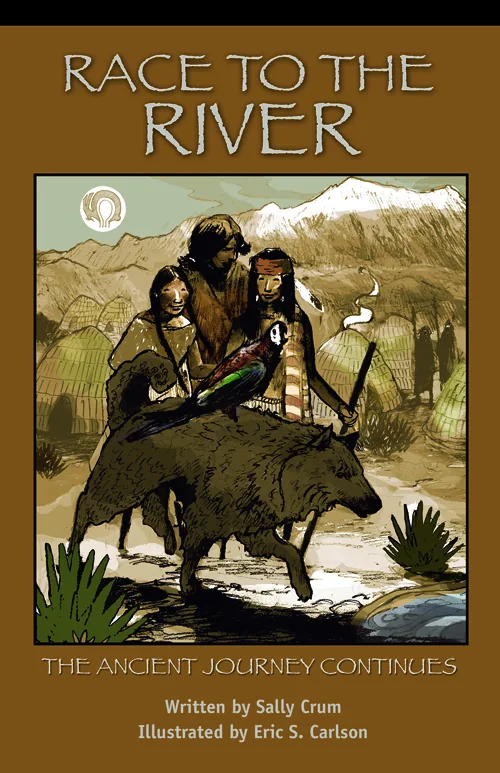
Race to the River
by Sally Crum
Sally Crum writes historical fiction for younger readers, published here in 2009. Its subject is Native life in the Southwest, told as a story rather than a textbook, for children who are meeting that world for the first time.
- Published
- 2009
- ISBN
- 978-1-932738-72-8
- Pages
- 160
- Publisher
- Western Reflections Pub. Co.
- Listed at
- $12.95
Publication details from Open Library. The price shown is the last one on record and is historic, not a current offer.
- Direct from us info@westernreflectionspublishing.com or (336) 565-6915. We pack and post from Lake City.
- Amazon Buy from Amazon.
- Any bookshop Quote ISBN 978-1-932738-72-8 and your local bookseller can order it.
About this book
Race to the River is the sequel to Race to the Moonrise, and it picks the story up where that book left off. A young Native American brother and sister continue a journey set in the 13th century. This time they are bringing their injured father home, from what is now southern Colorado to their own home at Casas Grandes in Mexico.
The second thread belongs to three travelers who set out from the California coast. The author's description calls them unlikely emissaries of peace. They hope to head off an attack on their village by Mojave Indians, and to do it they have to cross the desert and reach the Colorado River before time runs out. Neither party knows about the other at the start.
That is the hook of the book. The paths of both groups are bound to meet, and each journey's outcome is shaped, without anyone knowing it, by the other. Readers who followed Long Legs and Little Basket in the first book keep learning about the prehistory of the Southwest, and they also pick up the story of several Southern California Native groups. Open Library lists the book as juvenile fiction about the Indians of Mexico and of North America, published by Western Reflections in 2009.
What is inside
A father brought home
The brother and sister travel from southern Colorado toward Casas Grandes in Mexico with their injured father.
Peace emissaries from the coast
Three travelers leave the California coast hoping to avert an attack by Mojave Indians on their village.
A desert crossing
The coastal party races against time to cross the desert and reach the Colorado River.
Two journeys that meet
The paths of both groups are destined to cross, and each outcome is influenced by the other.
More Southwest prehistory
Readers keep learning about the early Southwest, as in the first book.
Southern California peoples
The sequel also introduces several Native groups of Southern California.
Who it is for
Race to the River is written for readers who finished Race to the Moonrise and want to know what happened to the family afterward. It also stands up for children who start here, since the plot is a self contained race against a deadline. Teachers who use the first book in class can extend a unit on Southwestern peoples with it. The author's site says both books were approved for use with Native American children by the Intertribal Cultural Committee of the Council for Indian Education.
About the author
Her website says Sally Crum spent over thirty years in western Colorado and the Four Corners area, much of it on archaeological surveys. Goodreads credits Eric S. Carlson as illustrator of this book. Her author page here has more about her and about the other books we carry.
The place and the period
Casas Grandes, also called Paquime, is a prehistoric site in the state of Chihuahua, in northern Mexico. It sits in a fertile valley along the Casas Grandes River and depended on irrigation. Wikipedia describes it as one of the largest and most complex Mogollon culture sites in the region, with an estimated 2,500 people in the town itself and perhaps 10,000 in its controlled area.
Its craftspeople made copper bells and ornaments, pottery and beads from marine shell, and scarlet macaws, apparently imported from Mesoamerica, were raised there. Casas Grandes pottery has been found as far north as New Mexico and Arizona. That reach of trade is what makes a long walk between Colorado and Chihuahua believable as the setting for fiction.
Source: Wikipedia, Paquime
Good to know
Do I need to read Race to the Moonrise first?
Is it fiction?
Where does the story go?
Who illustrated it?


Have a book of your own?
This is the kind of book the house publishes: regional history, biography, memoir and the stories that belong to a place. Send us yours and a person will read it.