
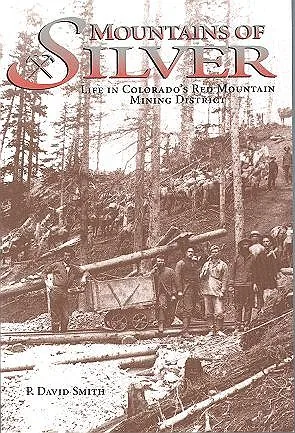
Mountains of Silver
The histories of the communities that sprang into being with these mines, the railroads constructed to service them, and the men and women who lived, worked and died in them are the threads deftly woven into the richly textured story of Mountains of Silver. It's a colorful and varied tapestry that depicts the lives of the prospectors who made the first rich strikes; the land promoters, speculators, and road- and railroad-builders who capitalized on the frenzied rush to the area; and the motley collection of miners, lawyers, merchants, prostitutes, saloonkeepers, and freighters who attempted to profit from the boom.
- Published
- 2000
- ISBN
- 1-890437-36-0
- Pages
- 236
- Category
- History
- Publisher
- Western Reflections Publishing Co.
- Listed at
- $21.53
Publication details from Open Library. The price shown is the last one on record and is historic, not a current offer.
- Direct from us info@westernreflectionspublishing.com or (336) 565-6915. We pack and post from Lake City.
- Amazon Buy from Amazon.
- Any bookshop Quote ISBN 1-890437-36-0 and your local bookseller can order it.
About this book
Mountains of Silver is a history of the Red Mountain Mining District, the mining country between Silverton and Ouray in Colorado's San Juan Mountains. It is built around the communities that sprang up with the mines, the railroads laid to serve them, and the men and women who lived, worked and died there.
The description calls the result colorful and varied, and it names the cast. There are the prospectors who made the first rich strikes. There are the land promoters, speculators, and road and railroad builders who capitalized on the frenzied rush. And there is the motley collection of miners, lawyers, merchants, prostitutes, saloonkeepers and freighters who attempted to profit from the boom.
A retail listing for the book gives its subtitle as Life in Colorado's Red Mountain Mining District, dates a 1994 edition, and lists 236 pages, which matches our catalogue. Our catalogue record dates this edition to 2000, so we can't say which printing you will receive, and we won't guess. The same listing says the district's output ranked second in Colorado only to Leadville, with more than thirty million dollars in metals taken out in about twenty-five years.
What is inside
The first rich strikes
The prospectors who made the early discoveries are part of the cast.
Communities born with the mines
The book follows the towns that sprang into being around the mines.
Railroads and roads
Road and railroad builders are among those who capitalized on the rush.
Promoters and speculators
Land promoters and speculators profited from the frenzied rush to the area.
Everyday life in the boom
Miners, lawyers, merchants, saloonkeepers and freighters all appear in the story.
Who it is for
Mountains of Silver is for readers who have driven the highway between Silverton and Ouray and wondered what happened on the slopes above it. Local historians, ghost town explorers and anyone with an interest in the Colorado silver boom will get the most from it. It also suits readers who like their mining history told through people and towns rather than ore tonnage. Collectors of Western Reflections books will want it for the shelf beside the other San Juan histories.
About the author
P. David Smith wrote this account of the Red Mountain district, one of several books of his about the Ouray and Silverton country. We could not find a verified biography, only his books, and that is what we describe. His author page gathers the whole shelf in one place.
The place and the period
The Red Mountain district lies along the Million Dollar Highway between Silverton and Ouray. The Fort Lewis College Red Mountain Project dates the rush to 1882, when John Robinson discovered the Yankee Girl Mine, whose rich ore lay in vertical chimneys rather than the usual lode deposits. The Congress, Guston and National Belle mines followed soon after.
Towns grew around the mines. Red Mountain City moved three times and burned in 1892 and again about two years later, while Ironton and Chattanooga served as lower elevation supply points. By 1883, according to Legends of America, nearly 40 mines were shipping ore to smelters and the district's population topped 3,000.
Otto Mears finished a road from Ouray in 1883 and began the Silverton Railroad in 1887. It reached Ironton in November 1888 and was completed to Albany in September 1889. The Silver Panic of 1893 hurt the district, which never fully recovered, and the Idarado Mine ran from the 1930s until it closed in 1978.
Source: Fort Lewis College, Red Mountain Project: Mining History
Good to know
Where is the Red Mountain Mining District?
Is the book fiction?
Which edition is this?
How big was the district's output?


Have a book of your own?
This is the kind of book the house publishes: regional history, biography, memoir and the stories that belong to a place. Send us yours and a person will read it.