
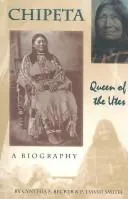
Chipeta: Queen of the Utes
by P. David Smith and Cynthia Simmelink Becker
Chipeta was to outlive Ouray by almost half a century. During part of this time she was ignored, forgotten, and even cheated by the whites, although immediately after Ouray’s death many suitors had courted her and men wrote poetry about her. Then in her old age the whites honored her again on many special occasions. Although she could not have children of her own, she “adopted” many orphaned Utes. Chipeta played the guitar well, sang beautifully in three languages, and was well known for her exquisite beadwork. Perhaps her greatest legacy was that through all that happened to her, she did not become embittered and remained a humble, caring, loving person. Chipeta was a special individual that we would all do well to emulate.
- Published
- 2003
- ISBN
- 978-1-890437-79-4
- Pages
- 278
- Category
- History
- Place
- Ouray
- Publisher
- Western Reflections Publishing Co.
- Listed at
- $21.95
Publication details from Open Library. The price shown is the last one on record and is historic, not a current offer. Cover image courtesy of Open Library.
- Direct from us info@westernreflectionspublishing.com or (336) 565-6915. We pack and post from Lake City.
- Amazon Buy from Amazon.
- Any bookshop Quote ISBN 978-1-890437-79-4 and your local bookseller can order it.
About this book
Chipeta: Queen of the Utes is a biography of the wife of Chief Ouray, written by P. David Smith and Cynthia Simmelink Becker. It looks at a woman who outlived her husband by almost half a century, and at how she was treated during those years.
The description is candid about the hard parts. For a time Chipeta was ignored, forgotten and even cheated by white settlers. Yet right after Ouray's death many suitors courted her, and men wrote poetry about her. In her old age, the whites honored her again on many special occasions.
The book also gives a personal picture. Chipeta could not have children of her own, but she adopted many orphaned Utes. She played the guitar well, sang beautifully in three languages, and was known for exquisite beadwork. The description names what may be her greatest legacy: through everything that happened to her she did not become embittered, and stayed a humble, caring, loving person. Open Library lists the book at 278 pages, published in 2003.
What is inside
Life after Ouray
Chipeta lived almost fifty years after her husband's death, and the book follows those years.
Neglect and honor
She was ignored, forgotten and even cheated, then honored on special occasions in old age.
Suitors and poetry
After Ouray died, many suitors courted her and men wrote poetry about her.
Adopted children
She could not have children but adopted many orphaned Utes.
Music and beadwork
She played guitar, sang in three languages and was known for her beadwork.
Her legacy
The description portrays a person who stayed humble, caring and loving despite everything.
Who it is for
This biography is for readers of Colorado and Ute history, and for anyone who wants the story of a woman who is often mentioned only beside her husband. It suits school and library collections on Native American women, and families who visit Ute history sites. It is a life story, so it works for general readers as well as those who already know the outline of Ouray's life. Teachers may find the personal details useful for discussion.
About the author
The book is credited to P. David Smith and Cynthia Simmelink Becker. Smith also wrote a biography of Ouray that Western Reflections published as a later paperback. Open Library lists Cynthia S. Becker among the authors of a later Chipeta book, Chipeta: Ute Peacemaker, from 2008. Each of them has an author page on this site that you can read next.
The place and the period
Chipeta was born in 1843 or 1844, according to Wikipedia, and was raised among the Uncompahgre Utes in what is now Conejos, Colorado. Wikipedia says she became the second wife of Chief Ouray in 1859, when she was about sixteen. Ouray led the Tabeguache (Uncompahgre) band in western Colorado and favored negotiated agreements over armed resistance.
In 1880 the Ute delegation went to Washington, D.C., and on March 7 Chipeta testified before a congressional inquiry into the 1879 Meeker Massacre. That year the Ute Removal Act forced the White River and Uncompahgre Utes to move to the Uintah and Ouray Reservation in Utah. Ouray died in August 1880, leaving Chipeta a widow with decades ahead of her.
She died on August 9, 1924, at Bitter Creek, Utah. On March 15, 1925, she was reburied at what is now Ouray Memorial Park, part of the Ute Indian Museum in Montrose, Colorado, where about 5,000 people attended a memorial service. She was inducted into the Colorado Women's Hall of Fame in 1985. Sources differ on some dates, so we give those that appear on the page cited.
Source: Wikipedia: Chipeta
Good to know
Who was Chipeta?
Is the book fiction or nonfiction?
How long is it?
Who wrote it?
Where can I buy it?


Have a book of your own?
This is the kind of book the house publishes: regional history, biography, memoir and the stories that belong to a place. Send us yours and a person will read it.