
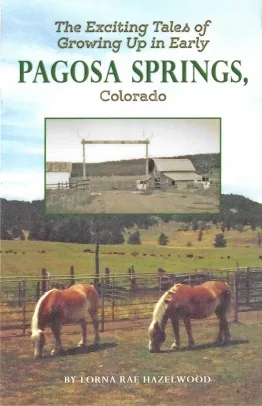
The Exciting Tales of Growing Up in Pagosa Springs
The 1920s and 1930s brought many exciting and true adventures to the three Hazelwood brothers, Chester, Loren, and Melvin, on their family's ranch outside Pagosa Springs, Colorado. They had many of the adventures of those earlier pioneers of the 1880s and 1890s. There were Native Americans and mountain men, terrible snow storms and severe accidents, outlaws and crooked horse trader, and narrow escapes with locomotives. Trapping brought in much of their hard cash and hunting and fishing supplied most of the family's food. Boys on ranches had to grow up quickly in such an environment by necessity. Quite often there were life and death decisions for them to make.
- Place
- Pagosa Springs
- Listed at
- $17.21
The price shown is the last one on record and is historic, not a current offer.
- Direct from us info@westernreflectionspublishing.com or (336) 565-6915. We pack and post from Lake City.
- Amazon Search Amazon for this book. Out of print books usually turn up through marketplace sellers.
About this book
The Exciting Tales of Growing Up in Pagosa Springs is a book of true ranch stories from southwestern Colorado. The description says the 1920s and 1930s brought many exciting and true adventures to three brothers, Chester, Loren and Melvin Hazelwood, on their family's ranch outside Pagosa Springs.
It says they had many of the adventures of the earlier pioneers of the 1880s and 1890s. The encounters it lists include Native Americans and mountain men, terrible snow storms and severe accidents, outlaws and a crooked horse trader, and narrow escapes with locomotives.
Money and food are part of the picture. Trapping brought in much of the family's hard cash, and hunting and fishing supplied most of its food. The description closes by saying boys on ranches had to grow up quickly, and that they often faced life and death decisions.
Who it is for
The description marks this as a family memoir of ranch life near Pagosa Springs in the 1920s and 1930s. It is a local account, aimed at readers interested in that place and period.
Ways to use this book
Visiting ranch country around Pagosa Springs
Start with the museum's website, which lists its current exhibits and season. Then use the county article to understand what the logging and ranching economy looked like, so the landscape around town makes sense when you drive through it.
Collecting your own family stories
Books like this one often push readers to write down what older relatives remember. The museum's page links to the Colorado Historic Newspapers Collection, a free way to look for local names and dates before you sit down for an interview.
Reading across Colorado memoirs
If you like first person accounts of mountain life, browse the other history books in the library and compare how different families describe work, weather and food in their own corners of the state.
Go deeper
The Hazelwood brothers grew up on a ranch outside Pagosa Springs in the 1920s and 1930s. These resources cover the town's past, the county around it, and the local museum.
Pagosa Springs History Museum
The museum's website describes displays on the history of the Pagosa Springs area and gives its address as 96 Pagosa Street. It also links to outside research tools such as the Colorado Historic Newspapers Collection.
Pagosa Springs, Colorado Encyclopedia
This article follows the town from its hot springs and Fort Lewis days through the lumber boom that began after a narrow gauge railroad arrived in 1900.
Archuleta County, Colorado Encyclopedia
The county article says logging and ranching brought the railroad to Pagosa Springs, and it explains how the county, created in 1885, took shape.
Good to know
Who are the brothers in the book?
What years does it cover?
Is it true?


Have a book of your own?
This is the kind of book the house publishes: regional history, biography, memoir and the stories that belong to a place. Send us yours and a person will read it.