






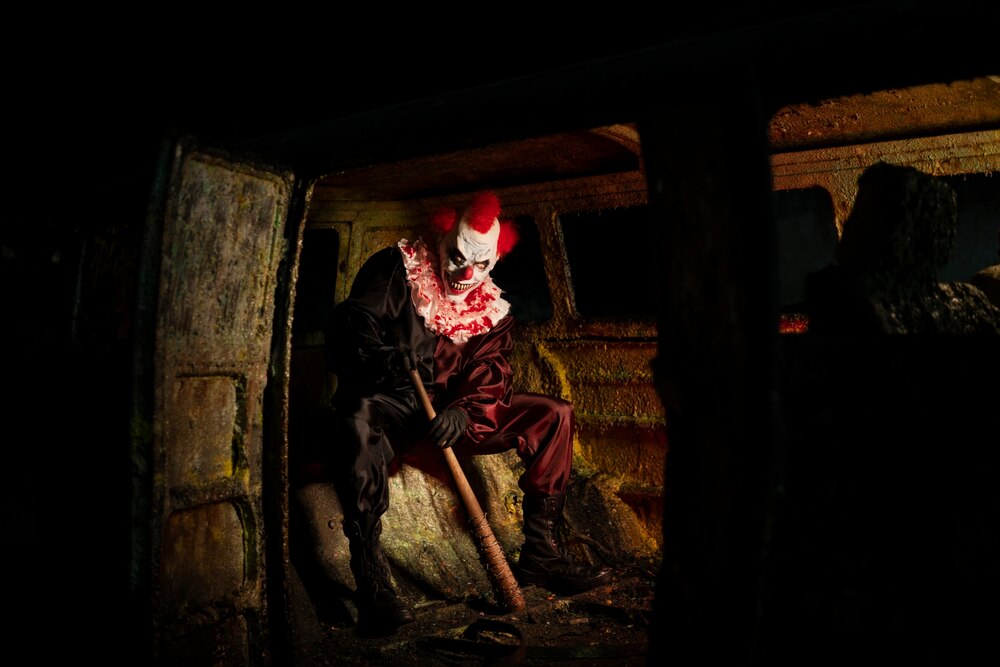
Horror is not really about monsters, blood, or shocking twists. The true power of the genre lives in dread, that slow, tightening sensation in a reader’s chest that something is wrong, something is coming, and it cannot be stopped. Dread lingers. It whispers. It makes readers glance over their shoulders long after they close the book.
If you want to write horror that stays with people, you have to master how to build dread in horror stories. This guide walks through the psychological, structural, and stylistic techniques that create sustained fear, not cheap jump scares, but atmosphere that crawls under the skin and refuses to leave. Whether you are drafting a short story, a novella, or a full-length novel, these principles work at every scale, and they build naturally on the fundamentals in our guide to writing a horror story.
What Is Dread in Horror Writing?
Dread is the anticipation of danger. It is the emotional space between normalcy and catastrophe. Unlike sudden shock, a loud bang or a jump scare, dread unfolds gradually. It is the sense that something is deeply wrong even before the characters realize it.
Writers like Edgar Allan Poe mastered psychological unease through atmosphere and unreliable narration, while Shirley Jackson built dread through subtle social tension and isolation. Modern authors such as Stephen King often blend the ordinary with the terrifying, letting dread grow from familiar kitchens, small towns, and quiet suburban streets. In every case, dread is not noise. It is silence waiting to break.
Dread vs. Terror vs. Horror: Know the Difference
Skilled horror writers treat fear as a range of notes rather than a single sound. Understanding the three most important notes will help you control exactly what your reader feels, and when.
- Dread is the long, heavy breath before trouble. It guides the reader toward the shape of a threat before the threat ever fully appears. Dread is anticipation.
- Terror is the spike of apprehension as the danger draws close. It happens inside the character’s head as they move deeper into a situation they cannot escape. Terror is the moment of dawning realization.
- Horror is the crash, the overwhelming reaction to the atrocity once it is revealed. It is the axe hitting bone, the body in the bathtub, the face in the window.
Dread does the quiet work that makes terror and horror land with full force. If you skip it and jump straight to the gore, you get a shock that fades in seconds. Build dread first, and the payoff resonates for pages. For a deeper look at how these emotions relate, see this reference on horror and terror as distinct literary effects.
1. Start With Normal, Then Fracture It
Dread works best when readers begin in a recognizable world. If everything is chaotic from page one, there is no baseline for fear. You need something ordinary before you can make it wrong.
Establish the following early:
- A safe environment
- Familiar routines
- Emotional stability
- Predictable patterns
Then introduce a small disruption. Maybe the dog refuses to enter the basement. Maybe the clocks stop at 3:17 a.m. Maybe the neighbor who always waves suddenly stands still and stares. The key is subtlety. A single crack in the glass is more disturbing than a shattered window, because the reader’s mind fills in what comes next. The reader senses the imbalance before the protagonist fully does, and that emotional gap is where tension is born.
2. Use Setting as a Living Presence
Setting in horror is never neutral. It breathes. It observes. It remembers. Whether it is a decaying mansion or an isolated hotel at the end of a long mountain road, the environment should feel active rather than decorative.
To build dread through setting:
- Emphasize sensory detail, especially smells, textures, and sounds
- Use repetition, such as the same creaking step every single night
- Highlight emptiness or confinement
- Suggest a history without ever fully explaining it
Instead of writing “the house was scary,” show peeling wallpaper that looks like flayed skin. Show cold spots that follow a character from room to room. Let the setting hint at something unseen, and the reader will do the frightening work for you. Vivid, grounded description is a craft skill worth developing, and resources like the Reedsy guide to writing horror break down how atmosphere carries a scene.
3. Control Information Carefully
Dread thrives on partial knowledge. If readers know everything, fear evaporates. If they know nothing, they feel disconnected and stop caring. The balance lies in revealing just enough to spark the imagination.
Withhold:
- The full nature of the threat
- Clear explanations
- Direct confirmation
Imply rather than state. A shadow moving behind a curtain is far more frightening than a detailed anatomical description of a monster. Psychological horror often refuses to hand readers a tidy answer, forcing them to piece clues together, and that uncertainty becomes almost unbearable. Remember, the reader’s imagination is more powerful than anything you can put on the page.
4. Slow the Pacing at the Right Moments
Ironically, dread increases when pacing slows. Fast action scenes produce adrenaline. Slow scenes produce anxiety, and anxiety is the soil dread grows in.
When a character approaches a locked door, stretch the moment:
- Describe the hallway in careful detail
- Focus on the sound of their breathing
- Let them hesitate
- Let them almost turn back
The longer the delay, the tighter the tension. This must be strategic, though. Slow pacing works best immediately before a revelation or a disruption. Think of it as stretching a rubber band. Pull it too far without release and it snaps uselessly, so pair every slow build with an eventual payoff. Compression sharpens this instinct, so it is worth trying to hold a full arc of unease inside a horror story of just 200 words.
5. Make the Threat Personal
Abstract danger creates curiosity. Personal danger creates dread. The threat must target something the protagonist genuinely values, such as:
- A child
- A secret
- Their sanity
- Their identity
- Their past
The most memorable horror ties its supernatural or violent element to emotional vulnerability. When grief, guilt, or motherhood is the wound, the monster becomes terrifying because it presses on something already tender. Ask yourself a single question: what does my character fear losing most? Then build your horror around that answer.
6. Use Psychological Uncertainty
Dread intensifies when characters begin to question reality. Is it supernatural? Is it trauma? Is it guilt? Is it madness? When the ground itself feels unstable, every detail becomes suspect.
Unreliable narrators are powerful tools here. When readers cannot fully trust what a character sees or remembers, paranoia sets in, and paranoia sustains dread across an entire book. Useful techniques include:
- Contradictory memories
- Inconsistent sensory descriptions
- Other characters denying that events happened
- Dreams blending seamlessly with waking life
The moment a reader stops trusting the narrator, they start bracing for everything.
7. Avoid Over-Explaining the Monster
One of the biggest mistakes in horror writing is overexposure. The more you describe a creature in precise detail, the less frightening it becomes, because fear shrinks under bright light.
Instead:
- Show fragments, such as claws scraping tile
- Use indirect reactions, such as animals panicking or lights flickering
- Describe the aftermath, such as blood without any sign of the attacker
A famous cinematic shark stays unseen for most of its film, and its absence is exactly what makes it terrifying. Mystery sustains dread far longer than clarity ever will.
8. Build Emotional Isolation
Isolation magnifies dread. When characters lack support, readers feel their vulnerability in their own gut. Isolation can take several forms:
- Physical, such as a remote cabin or an empty town
- Emotional, such as estranged or fractured relationships
- Social, such as being an outsider in a closed community
- Psychological, such as no one believing what the character has seen
Some of the best horror traps characters in emotional isolation long before any supernatural element escalates. That loneliness makes every creak heavier, because there is no one coming to help.
9. Escalate Gradually and Logically
Dread collapses if escalation feels random. Structure the progression so each beat grows naturally from the last:
- A subtle anomaly
- A repeated disturbance
- Denial
- Escalation
- Confirmation
- An irreversible shift
Every event should feel like an inevitable extension of the one before it. Here is a simple comparison to clarify what effective dread-building looks like in practice:
| Technique | Weak Execution | Strong Execution | Effect on Reader |
| Introducing the threat | Monster appears immediately | Subtle clues appear first | Suspense builds gradually |
| Setting | Generic haunted house | Detailed, sensory-rich environment | Immersion increases |
| Pacing | Constant fast action | Slow build before key moments | Heightened tension |
| Monster reveal | Full description early | Partial glimpses only | Imagination amplifies fear |
| Character stakes | Random victims | Personal emotional stakes | Deep emotional investment |
| Explanation | Clear early answers | Sustained ambiguity | Ongoing psychological unease |
Notice that strong execution always delays certainty while increasing emotional involvement.
10. Use Silence and Stillness
Sometimes nothing happening is more terrifying than something happening. Silence before a sound. Stillness before movement. Calm before the rupture.
Write scenes where:
- The power goes out
- The phone line goes dead
- The forest becomes unnaturally quiet
- The child stops crying, suddenly
Absence becomes presence. Readers instinctively anticipate the disruption that must follow, and that anticipation is dread in its purest form. Letting the reader sit in an uncomfortable quiet, and then holding them there a little longer, is one of the most reliable tools in the genre.
11. Exploit Reader Empathy
Dread intensifies when readers actually care. Develop your characters beyond archetypes by giving them flaws, regrets, desires, and secrets. The more human they feel, the more fragile they seem.
Many masters of the genre spend significant time building ordinary lives before terror intrudes. That patience makes horror feel invasive rather than sensational. When readers see themselves in a character, dread becomes personal, and personal dread is the kind that follows them home.
12. Let Consequences Linger
Dread grows when frightening events leave scars. After something terrible occurs, do not immediately move on. Show the aftermath:
- Sleepless nights
- Nervous new habits
- Relationship strain
- Subtle personality changes
Lingering effects signal that the danger is ongoing rather than resolved. If horror resets after each scare, dread disappears. Continuity of impact is what makes the threat feel permanent and real.
13. Use Foreshadowing Strategically
Foreshadowing plants emotional seeds. Small details introduced early can become devastating later:
- A childhood fear mentioned casually
- A broken lock that never gets repaired
- A superstition dismissed as nonsense
- A photograph with someone missing from it
When readers recognize the significance of a detail later, the dread intensifies retroactively. The key, again, is subtlety. Heavy-handed foreshadowing ruins tension, so it should feel inevitable only in hindsight, never obvious in the moment.
14. End With Unease, Not Just Resolution
Even when your story concludes, consider leaving emotional residue behind. Not every horror story needs a fully closed ending. Sometimes a touch of ambiguity keeps the dread alive well beyond the final page.
Questions can linger: Was the threat truly destroyed? Did the protagonist change permanently? Is something still watching? Psychological horror often thrives on exactly this kind of lasting uncertainty, the feeling that the door is closed but not locked.
How Professional Writers and Editors Sharpen Dread
Building sustained dread across an entire manuscript is one of the hardest things to pull off, because it depends on structure as much as sentence-level craft. A single mistimed reveal or a flat second act can drain the tension you worked so hard to create. This is where an outside perspective becomes invaluable.
If you are drafting a full-length horror book, our novel writing services help shape pacing and atmosphere from the ground up. Once a draft exists, developmental editing services can pinpoint exactly where tension sags and where a reveal arrives too soon. For line-level polish that keeps the prose taut, our professional book editing services refine every scene, and when the manuscript is ready to reach readers, our book publishing services guide the final step. Studying craft resources such as this breakdown of writing suspense alongside professional feedback is one of the fastest ways to level up.
Frequently Asked Questions
Final Thoughts: Dread Is Patience
Building dread requires restraint. It demands that you trust atmosphere over spectacle, suggestion over explanation, psychology over gore, and silence over noise. Dread is not about how loudly you can scare your reader. It is about how deeply you can unsettle them.
Slow the pace. Personalize the threat. Let the environment breathe. Withhold just enough truth. When it is done well, dread does not vanish when the story ends. It follows the reader into dark hallways, quiet bedrooms, and the stillness of midnight. And that is exactly where true horror lives. When your finished horror manuscript is ready to reach readers, our roundup of horror book publishers accepting submissions can point you toward the right markets.
