




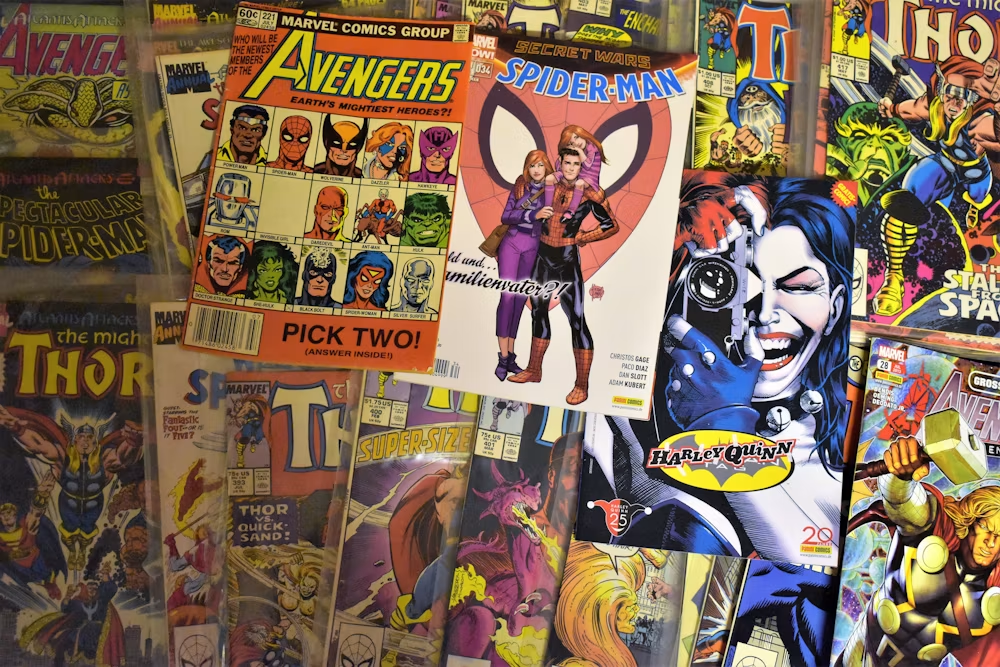
Europe has always treated comics as an art form rather than a disposable product. From French and Belgian bandes dessinées to British graphic novels and experimental Nordic work, European publishers have long embraced storytelling depth, visual innovation, and cultural substance. Comics here are widely called the “Ninth Art,” and that respect shapes everything about how the industry works. As 2026 unfolds, the tradition continues, along with a growing openness to new and international creators.
For writers and illustrators seeking meaningful publishing opportunities, Europe remains one of the most welcoming regions in the world. Success here depends less on hype and more on preparation, originality, and narrative clarity. This guide explores the leading European comic publishers accepting submissions in 2026, what they expect, and how creators can position their work professionally so it stands out from the slush pile.
How European Comic Publishing Works in 2026
European comic publishing runs on a different rhythm than the fast-paced American monthly market, so it helps to weigh it against the wider field of comic publishers before you commit. Instead of ongoing single issues, most houses focus on graphic novels, album-length releases, and limited series that are meant to sit on a shelf for years, not weeks. The dominant physical product is the album, a hardcover or large-format book that usually runs 46 to 64 pages, with 46 to 54 pages being the classic Franco-Belgian standard.
Because titles have a long commercial life, editors invest heavily in each project. Key traits of the European market include:
- Strong editorial involvement from acquisition through printing
- A preference for complete or well-developed projects rather than loose ideas
- Genuine respect for artistic individuality and authorial voice
- A long shelf life and steady backlist sales for published titles
- Openness to genres beyond superheroes, including memoir, historical fiction, science fiction, and literary work
Publishers are not just looking for entertainment. They want stories that resonate emotionally, culturally, or intellectually, and they reward creators who understand that the page is a design object as much as a narrative one.
How Western Reflections Publishing Helps You Submit With Confidence
Before approaching European publishers, many creators discover that their ideas are strong but their execution needs refinement. This is where Western Reflections Publishing fits naturally into the submission process. Rather than acting as a publisher, the team supports comic creators at the development stage, which is exactly where most promising projects either sharpen or stall.
The role is especially valuable for writers and artists who understand storytelling but need help translating their vision into a professional, submission-ready format. Support typically covers:
- Comic script structure, panel flow, and pacing
- Dialogue that reads naturally on the page and respects the art
- Character arc development and thematic clarity
- Submission proposals and pitch documents tailored for European publishers
European editors are selective, and unclear storytelling is one of the most common reasons for rejection. Working through professional developmental editing and careful book editing helps creators submit with confidence and a manuscript that already reads like a finished book.
Dargaud (France)
Dargaud is one of the most respected names in European comics and a cornerstone of the Franco-Belgian tradition. The publisher continues to support both established and emerging creators across adventure, thriller, historical, and literary genres.
In 2026, Dargaud looks for:
- A strong, distinctive narrative voice
- Emotionally layered characters that carry an album
- Visual storytelling that complements rather than merely illustrates the script
Dargaud favors projects that feel complete and intentional, especially those that balance artistic ambition with readable, well-structured storytelling. A polished dossier with a synopsis and finished sequential pages carries far more weight than a rough concept.
Humanoids (France)
Humanoids, founded in 1974, is internationally recognized for visually striking comics rooted in science fiction and fantasy, with a catalog famous for cinematic pacing and ambitious world-building. The house is known for looking at good original comics regardless of genre, and if that is your lane it is worth comparing other specialist science fiction comic publishers too.
They are particularly interested in:
- High-concept ideas with a clear hook
- A distinct artistic identity
- Stories with philosophical or social undertones
Humanoids welcomes global creators and generally asks that you submit complete work through their standard forms. Expect polished submissions that demonstrate both creative vision and technical control.
Glénat (France)
Glénat is one of Europe’s largest comic publishers, with a deep catalog spanning fantasy, historical fiction, adventure, and contemporary drama. It is a natural home for creators who think in series.
In 2026, Glénat values:
- Series potential and clear long-term direction
- Consistency across art and narrative
- A submission dossier that shows the project fully
A typical Glénat dossier includes a synopsis, character designs, and at least three finished sequential pages so editors can judge the look and feel. They often look for creators who can sustain quality and coherence across multiple volumes.
Dupuis (Belgium)
Dupuis is a heritage Belgian publisher known for family-friendly and youth-oriented comics, and it leads the European market in middle grade and young adult graphic novels. Demand in those categories has grown sharply, which makes Dupuis one of the more accessible large houses for newcomers with the right material. Creators aiming at younger readers should also look at other publishers open to all ages comics.
Creators should note two things. First, Dupuis leans toward accessible, character-driven stories with broad appeal. Second, the publisher operates the digital platform Webtoon Factory, which functions as a modern entry point where new creators can build an audience and get noticed. That digital route can be a practical stepping stone toward a print album.
Le Lombard (Belgium)
Le Lombard is rooted in the classic Belgian comic tradition while continuing to evolve with modern storytelling. It remains a strong option for creators who want to work in the album format.
They seek:
- Album-format stories built for the 46 to 54 page standard
- Strong pacing and clean structure
- Character-focused narratives with heart
Creators who respect traditional European formats while offering a fresh perspective tend to align well with Le Lombard’s editorial vision.
Rebellion Publishing (United Kingdom)
Rebellion, the home of 2000 AD, blends mainstream accessibility with independent creativity. Known for supporting creator-owned projects, the publisher encourages originality grounded in solid storytelling fundamentals.
They typically look for:
- Well-developed protagonists
- A clear genre focus and tone
- Professional presentation from the first page
Rebellion offers strong editorial guidance and broad reach across the UK and wider European market, which makes it a valuable target for genre creators.
SelfMadeHero (United Kingdom)
SelfMadeHero is one of the few UK houses actively championing thoughtful, literary graphic novels, along with adaptations of classic literature, biography, and comics journalism. If your work is character driven or non-fiction, this is a natural fit.
In 2026, they are receptive to:
- Author-driven graphic novels
- Literary, biographical, or historical themes
- Distinct visual storytelling styles
Their submission expectations are refreshingly concrete. A common ask is a synopsis of no more than one A4 page plus roughly eight pages of sequential art, so editors can see how you handle a real scene rather than a pitch on its own.
Titan Comics (United Kingdom)
Titan Comics works across licensed properties and original creator-owned content. While widely recognized for franchise titles, the house stays open to unique original projects that fit its editorial scope.
Titan prioritizes:
- Strong dialogue and confident pacing
- Market awareness and a sense of audience
- Polished, print-ready presentation
Creators submitting to Titan should show both creative originality and professional discipline, since the company balances commercial titles with selective original work.
NoBrow and Flying Eye Books (United Kingdom)
NoBrow, along with its children’s imprint Flying Eye Books, has built a reputation for beautifully produced, design-led graphic novels. The house is a strong option for illustrators with a striking personal aesthetic.
NoBrow generally looks at longer graphic novels, often 90 pages or more, and pays close attention to color, layout, and production quality. If your project is a visually ambitious long-form book, this is a publisher worth studying closely before you pitch.
Cinebook (European Comics Distribution)
Cinebook specializes in bringing European albums to English-speaking audiences. While it is more distributor than originator, it plays an important role in the European ecosystem and can widen the reach of work already rooted in the album tradition.
Cinebook focuses on:
- European album-style storytelling
- Clear narrative flow
- Cultural authenticity
Creators already working within European comic conventions may find Cinebook a valuable pathway to a wider readership.
Fantagraphics and the Alternative Scene
Fantagraphics and its European collaborations support unconventional, artist-driven comics. This is the route for bold, experimental work that prioritizes personal vision over commercial formula.
They look for:
- Unique creative voices
- Non-traditional storytelling and form
- A strong, uncompromising personal vision
If your comic challenges norms and puts artistic expression first, the alternative and indie scene across Europe, including small presses and festival-driven publishers, is often more receptive than a large commercial house.
How to Prepare a Submission That Gets Read
Across the European market, editors expect a tight, professional package rather than a pile of loose material. A strong submission dossier usually includes:
- A concise project synopsis, often one page or less
- Clear themes, genre, and character motivations
- A short creator biography and any relevant publishing history
- Finished sample pages, commonly three to ten pages of sequential art
- A page count and format so the editor can picture the finished album
European editors value clarity above all. A simple, well-presented submission almost always outperforms a complex but unfocused proposal. Treat the pitch like a product, because that is exactly how the acquisitions team will read it. Investing in professional publishing support at this stage can be the difference between a fast rejection and a real conversation.
Submitting as an International Creator
You do not need to be European to publish in Europe. Many houses actively work with international creators as long as the story is original, culturally aware, and professionally presented. A few practical points make a real difference:
- Most French and Belgian editors read English, but providing a French translation of your synopsis and sample pages noticeably improves your odds with those publishers.
- You generally do not need a literary agent, since the European market is far more open to direct submissions than US trade publishing. An agent can still help with foreign rights and royalty terms at the largest groups.
- Platforms such as Europe Comics exist specifically to translate and promote European titles internationally, which shows how seriously the industry takes cross-border work.
If you write prose fiction alongside your comics work, sharpening those skills through professional novel writing support can strengthen the plotting and dialogue that carry a graphic novel too.
Common Submission Mistakes Creators Make
Many promising projects are rejected for avoidable reasons. The most frequent are:
- Submitting unfinished concepts instead of developed, sample-ready work
- Ignoring a publisher’s genre focus and house style
- Overloading proposals with unnecessary backstory and world detail
- Weak dialogue, inconsistent pacing, or panels that fight the script
- Skipping editorial refinement and sending a first draft
European publishers expect storytelling discipline. A little research into each imprint, plus one honest editorial pass, prevents most rejections before they happen.
Why Europe Remains Ideal for New Comic Creators
Europe continues to reward creators who bring original ideas, artistic integrity, cultural awareness, and a long-term creative vision. Because editors are less trend-driven and more interested in stories that endure, a thoughtful debut can find a real home rather than getting lost in a crowded monthly schedule. For a creator with patience and craft, few markets are more generous.
Final Thoughts: Submitting With Confidence in 2026
The European comic publishing scene in 2026 remains open, thoughtful, and creatively rich. Success depends not on speed but on preparation and clarity. Whether you develop your project independently or refine it with professional support like Western Reflections Publishing, the goal is the same: submit a story that feels complete, intentional, and emotionally engaging. For creators willing to respect the craft and invest in quality storytelling, European comic publishers remain eager to discover new voices and bold ideas.
Frequently Asked Questions (FAQs)
For deeper research, see the international submission platform Europe Comics submissions page, an overview of the tradition on Franco-Belgian comics, and craft guidance in this MasterClass guide to making a comic book.
This guide is one part of Publishers Accepting Submissions in 2026, our full directory sorted by genre, format and country.
