





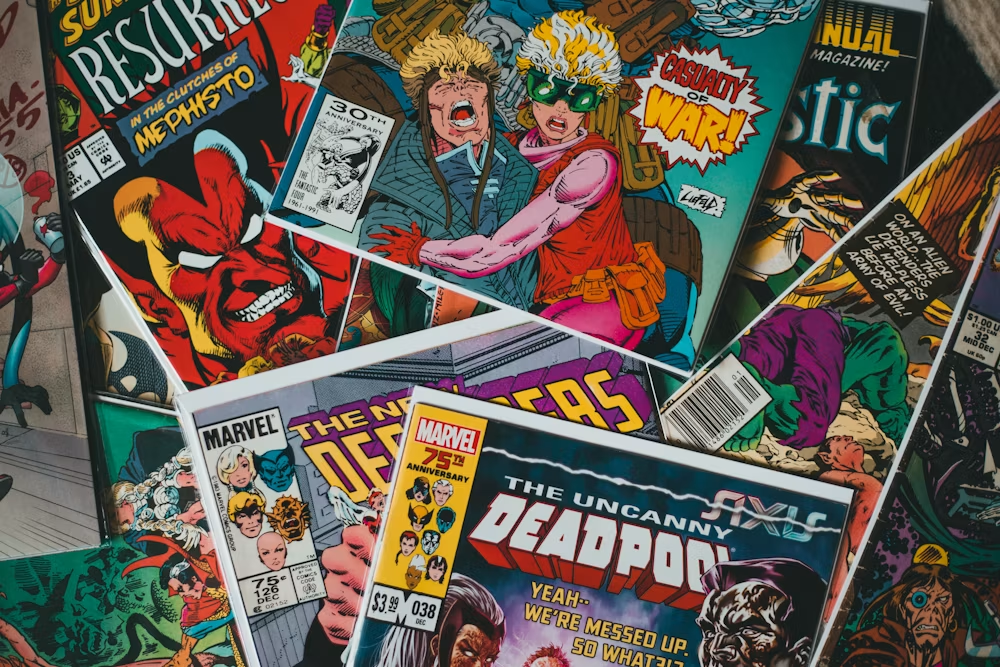
There is something quietly powerful about an all-ages comic. It does not shout, and it does not lean on shock or spectacle to hold your attention. Instead, it invites. A great all-ages comic welcomes readers of different generations into the same imaginative space, a place where humor, wonder, courage, sadness, and joy can sit side by side without being fenced off by age labels.
In 2026, all-ages comics are not a niche corner of the industry. They are one of the healthiest and most creatively open areas in publishing. Schools are using graphic novels more than ever, parents are actively searching for stories they can share with their children, and librarians and educators are championing visual storytelling as a real path to literacy. Publishers large and small are paying close attention, and as with comic book publishers accepting submissions more broadly, many of them are opening their doors to new voices.
If you are a creator with a story that can sit comfortably in a child’s hands while still saying something meaningful to an adult, this is one of the best times to submit your work. This guide walks through the all-ages comic publishers accepting submissions right now, what each one tends to look for, and exactly how to prepare a submission package that gets taken seriously.
What “All-Ages” Really Means in Today’s Comic World
Before diving into publishers, it helps to reframe the term. “All-ages” does not mean “simple.” It means accessible. These are stories that avoid explicit content but never avoid emotional depth. They can be playful, whimsical, adventurous, heartfelt, mysterious, or gently dark. The best all-ages comics work on layers, so a child may fall in love with the characters and colors while an adult recognizes the themes underneath.
This is different from a strictly “kids only” book. All-ages implies a genuine crossover appeal, the same quality that lets animated films fill theaters with parents and children alike. Editors in this space use words like all-ages, middle grade, and young reader in specific ways, so knowing where your project fits is the first step toward submitting it well.
Publishers in this space tend to look for:
- Clear, expressive art styles that read cleanly on the page
- Strong visual storytelling that carries the plot without over-explaining
- Characters with heart and a distinct point of view
- Stories that do not talk down to younger readers
- Worlds that feel safe to enter but are never empty
With that foundation in place, here is where creators are finding real opportunities in 2026.
1. Western Reflections Publishing: A Creative Gateway into All-Ages Comics
Western Reflections Publishing has become an increasingly visible presence in the all-ages comic conversation, and what sets the team apart is not simply that they work with comics. It is how they work with creators.
Rather than acting like a distant gatekeeper waiting for a flawless, polished submission, Western Reflections Publishing often functions as a creative bridge. The team collaborates with writers and artists who have strong ideas but need help shaping them into submission-ready comic projects. That work includes story development, character refinement, dialogue polishing, and structuring long-form narratives that suit younger and family audiences. Creators who want hands-on support can explore the company’s children’s book writing services and book publishing services to see how a raw concept becomes a finished, market-ready story.
For all-ages creators, this approach is valuable because stories for broad audiences require a particular sensitivity, clarity without dullness and warmth without weakness. Western’s involvement in children’s stories, youth-friendly fantasy, and visually driven narratives has naturally extended into the all-ages comic space.
They are especially suited to creators who:
- Have a strong concept but need help developing it into a full script
- Are transitioning from prose writing to sequential comic storytelling
- Want guidance shaping age-appropriate but layered stories
- Are building their first major all-ages comic project from the ground up
2. Scholastic Graphix: Where All-Ages Comics Meet Classrooms and Book Fairs
When people think of all-ages comics, Scholastic Graphix is often one of the first names that comes to mind, and for good reason. Graphix titles dominate school libraries, book fairs, and reading lists across the world. Their focus sits at the heart of the all-ages movement, publishing stories that encourage reading, imagination, empathy, and curiosity. Adventure series, coming-of-age tales, humorous graphic novels, and gentle fantasy all thrive here.
What makes Scholastic particularly appealing is the longevity of their books. These are not just comic shop releases; they become part of educational ecosystems. Characters grow with readers, series evolve, and worlds expand over many volumes. They tend to gravitate toward middle-grade and younger teen audiences, strong and likable protagonists, emotional clarity, and expressive, approachable visual styles. If your comic feels like something a child might discover at school and treasure at home, Scholastic Graphix is the kind of publisher your work naturally speaks to.
3. First Second: Literary All-Ages Comics with Emotional Depth
First Second has spent years building a reputation for graphic novels that do not fit neatly into “kids” or “adults” boxes. Their all-ages and middle-grade comics often feel like illustrated novels, rich in character, atmosphere, and emotional honesty. They are especially drawn to stories that grow with the reader, so a First Second book might be whimsical on the surface but quietly profound underneath.
Their catalog includes fantasy adventures much like those championed by dedicated fantasy comic publishers, realistic coming-of-age stories, folktale-inspired works, and deeply personal narratives told through accessible visuals. First Second is a strong match if your work has a distinct voice, explores identity, friendship, fear, or belonging, leans into mood and theme as much as plot, and treats young readers as emotionally intelligent. In 2026, they remain one of the most respected homes for creators who see all-ages comics as a serious literary form.
4. BOOM! Studios and the KaBOOM! Imprint: High-Energy Stories for Younger Readers
BOOM! Studios has been instrumental in shaping the modern all-ages comic market, and its KaBOOM! imprint is a dedicated home for younger readers. Known for vibrant art, fast-moving stories, and emotionally resonant characters, these titles often bridge the gap between animation, comics, and children’s literature. The books frequently feel cinematic, with big expressions, clear action, and memorable heroes, but beneath the surface many of them deal with friendship, courage, grief, confidence, and change.
BOOM! encourages creators to submit pitches that show originality, strong narrative arcs, and visually compelling characters. They tend to favor strong series potential, dynamic and readable artwork, clear character arcs, adventure-driven narratives, and humor balanced with sincerity. If your all-ages comic feels like it could become a show, a game, or a long-running series, this is a natural home to consider.
5. Oni Press: Playful, Offbeat, and Creator-Driven
Oni Press occupies a space that overlaps between indie experimentation and mainstream accessibility. While they publish across age ranges, their all-ages and youth-friendly comics are known for being energetic, funny, heartfelt, and sometimes delightfully weird. They are often open to projects that feel different, whether that means unusual art styles, quirky humor, or unexpected premises, as long as the story stays emotionally grounded and age-appropriate.
Oni’s all-ages titles frequently feature found-family dynamics, light fantasy and the sort of all-ages science fiction comics that specialist presses seek, comedy with heart, visually inventive worlds, and characters who feel instantly relatable. For creators who want to make something joyful, strange, and sincere without drifting into cynicism, Oni Press continues to be an exciting place to submit in 2026.
6. Mad Cave Studios and the Maverick Imprint
Mad Cave Studios has grown quickly, and its Maverick imprint is built specifically for all-ages and young adult readers. What makes Mad Cave stand out for new creators is its annual Talent Search, an open call that invites both writers and artists to submit work directly. That kind of structured, transparent opportunity is rare, and it makes the company one of the more approachable publishers for first-time comic creators.
Maverick titles lean into coming-of-age themes, adventure, and grounded emotional stakes. If you want a clear, published path to submit and a team that actively recruits fresh voices, keep an eye on Mad Cave’s submission windows and talent search announcements throughout the year.
7. Papercutz: Humor, Adventure, and Global Appeal
Papercutz has long specialized in comics for younger and family audiences, publishing both original titles and licensed properties. Their strength lies in accessibility, with clear storytelling, expressive art, and concepts that work across cultures. They are particularly welcoming to light adventure stories, comedy-driven comics, mystery and school-age protagonists, and series with episodic potential. Papercutz projects often translate well to libraries and international markets, making them a strong option for creators thinking about wide distribution and long-term readership.
8. Flying Eye Books: Visual Storytelling at Its Most Expressive
Flying Eye Books has built its reputation on beautiful, design-forward graphic novels and illustrated stories. Their all-ages comics often feel like art books you can read, projects where visual storytelling matters as much as plot. They are known for distinct and sometimes experimental art styles, gentle and thoughtful narratives, stories that reward slow reading, and projects that appeal to children, teens, and adults alike.
Flying Eye tends to support creators who think visually first. If your comic relies on atmosphere, composition, color, and emotion more than dense dialogue, their publishing philosophy aligns closely with your approach. In 2026, they remain one of the most respected publishers for creators who treat all-ages comics as both literature and visual art.
9. Other Publishers Worth Watching
Beyond the names above, several other publishers regularly work in the all-ages and family-friendly space and are worth researching before you submit:
- Archie Comics welcomes all-ages submissions with engaging humor, relatable characters, and clean storytelling, including both classic-style stories and more experimental formats.
- IDW Publishing handles licensed franchises and original comics, and it looks for creators with a strong sense of visual storytelling.
- Action Lab Entertainment made its name on all-ages books and is known for taking chances on high-concept indie projects.
- Andrews McMeel Publishing has increasingly embraced warm, witty graphic novels that blur the line between comics, illustrated fiction, and visual memoir.
What All-Ages Publishers Are Looking for Right Now
Across the industry, a few clear patterns are emerging in what editors want:
- Emotional safety without emotional emptiness. Publishers want stories that are appropriate but not hollow. Family comics are increasingly expected to engage real feelings.
- Visual clarity. Clean storytelling, readable panels, and expressive characters matter deeply, because confusion loses young readers quickly.
- A strong hook. A compelling premise helps a book stand out in crowded school and library spaces.
- Series potential. Many all-ages publishers think long-term, so worlds that can expand are especially attractive.
- An authentic voice. Whether your tone is whimsical, adventurous, or quiet, sincerity is a major selling point.
How to Prepare an All-Ages Comic Submission
Landing a deal is not only about talent. It is about presenting your work the way an editor expects to receive it. A typical comic submission package includes a short query letter, a one-page synopsis or script, five to fifteen finished sample pages, and a brief creator bio. Character designs and concept art are helpful extras that show range. Keep your files under about twenty megabytes so you do not overload an editor’s inbox, and follow each publisher’s exact delivery method, since some want email attachments while others prefer a shared link.
Before you send anything, work through these practical steps:
- Read current all-ages comics. Study new releases, not just classics, and notice tone, pacing, and page design.
- Clarify your audience. Decide whether you are writing for early readers, middle grade, or a true all-ages crossover, then say so clearly in your pitch.
- Lead with character. Memorable characters drive this market far more than spectacle.
- Polish your visuals. Even a strong story struggles if the art is not readable and expressive, so invest in clean lettering and professional presentation.
- Follow the guidelines exactly. Editors read submission rules as a test of professionalism, so match every requirement before you hit send.
If your pages need a second set of eyes before they go out, professional book editing services can tighten your script, and thoughtful book cover design can help a self-published edition stand shoulder to shoulder with traditional titles. For a deeper look at the craft and the market, resources such as Reedsy’s guide to making a comic book, the Amazon KDP help center on comics and graphic novels, and ongoing coverage from Publishers Weekly’s comics desk are worth bookmarking.
Frequently Asked Questions
Final Thoughts: All-Ages Comics Are Stories That Stay
Many readers do not remember the first adult novel they finished, but they often remember their first comic. All-ages comics have a unique power, arriving early and staying late. They shape imagination, teach visual language, and become comfort objects, sources of inspiration, and sometimes the very reason someone decides to become a creator.
In 2026, publishers are not just accepting all-ages submissions; they are actively searching for stories that carry wonder forward. Whether you collaborate with a creative partner like Western Reflections Publishing, approach established names like Scholastic Graphix or First Second, or explore visually driven homes like Flying Eye Books, the message across the industry is clear. If you have a story that can be held by a child and still mean something to an adult, there is space for it.
Disclaimer: Western Reflections Publishing shares publisher listings for informational purposes only. We are not partnered with any of the publishers mentioned, and we do not guarantee anything related to submissions, acceptance, or publication. Our expertise lies in professional writing, editing, and book promotion services that help authors present their work effectively.
This guide is one part of Publishers Accepting Submissions in 2026, our full directory sorted by genre, format and country.
