
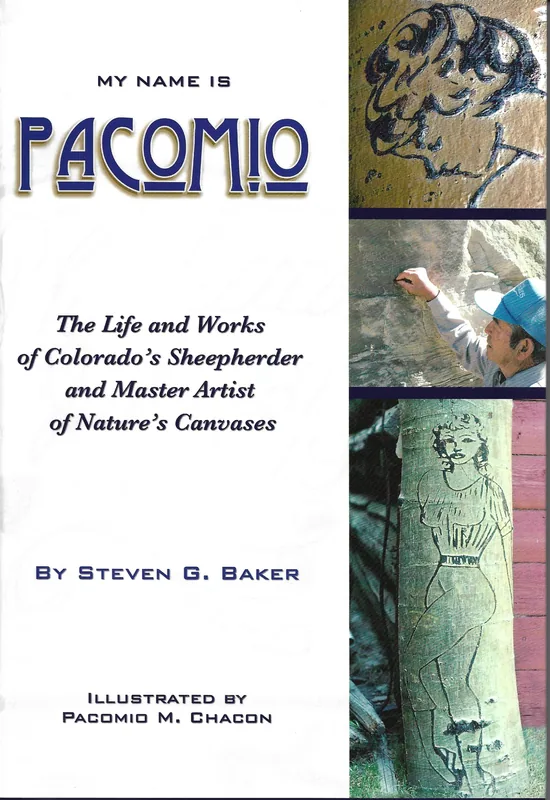
My Name is Pacomio
show Paco (1916-2009) and one of his classic "pin-up style" nudes, as well as another good example of his artistic merit. His, as well as most other sheepherder's art, is so rapidly disappearing that today most of what remains has to be viewed in a few private collections or in remote rural areas of western Colorado and eastern Utah. The author, Steven G. Baker, has been a historian, anthropologist, and archaeologist for over fifty years; but even more important to this book, and to him, he was a good friend of Paco for the last twenty-five years of Pacomio's life. This close friendship that they shared shows through clearly in this book, and allowed Baker to gain many detail of Chacon's life, Mexican-American culture, and the lonely but special life of a sheepherder.
- Published
- 2024
- Place
- Colorado
- Listed at
- $37.71
Publication details from Open Library. The price shown is the last one on record and is historic, not a current offer.
- Direct from us info@westernreflectionspublishing.com or (336) 565-6915. We pack and post from Lake City.
- Amazon Search Amazon for this book. Out of print books usually turn up through marketplace sellers.
About this book
My Name is Pacomio is a book about Pacomio Chacon, called Paco, who lived from 1916 to 2009. He was a sheepherder in western Colorado, and the book looks at his life and at the art sheepherders made. The description says his art, like most sheepherder art, is disappearing so quickly that what remains sits in a few private collections or in remote rural areas of western Colorado and eastern Utah.
The description mentions two examples of Paco's work: one of his classic pin-up style nudes, and another that shows his artistic merit. It also points to the book's other threads, which are Mexican-American culture and the lonely but special life of a sheepherder.
The author is Steven G. Baker. The description calls him a historian, anthropologist and archaeologist for over fifty years, and says he was a good friend of Paco for the last twenty-five years of Pacomio's life. That friendship, it says, let Baker gather many details of Chacon's life. Our record dates this edition to 2024. We could not load a publisher or retailer page to confirm that, or the page count, so we leave them out. The record is limited, and this page says only what it supports.
Who it is for
The book is for readers interested in Colorado folk art, Mexican-American history in the West, and the working life of sheepherders. Anyone who has come across carved aspen or other herders' work in rural western Colorado or eastern Utah may want to know who made it and why. It is a biography built on a long personal friendship.
Ways to use this book
Finding herder art in the field
If you hike in aspen country, treat any old carving as a historic record. The NPS page asks visitors not to add new marks, and it says the most recent carvings are by hikers, which it calls prohibited. Photograph what you find and leave the tree alone.
Understanding a vanishing folk art
The book's description says herder art survives mostly in private collections and remote places. Start with the two reference pages above to learn the vocabulary, then read the book for one herder's story, rather than the general history.
Asking a family about its sheep camp past
Relatives who herded in Colorado or Utah may still have photographs or carved objects. Ask what they remember before it is lost, and write down names and places with each item.
Go deeper
Pacomio Chacon herded sheep in western Colorado, and the book looks at the art sheepherders made. Aspen carvings by herders are a well documented cousin of that tradition, and these two sources explain them.
Basque Sheepherder Aspen Carvings, National Park Service
A Great Basin National Park page on arborglyphs. It says the carvings include names, dates, places and drawings, and that the oldest were left by Basque herders.
Arborglyph, Wikipedia
A general reference on tree carvings by sheepherders across the American West. It says wildfire, disease and natural decay are reducing the number that survive.
Good to know
Who was Pacomio Chacon?
Who wrote it?
Is it fiction or nonfiction?
Where can I buy it?


Have a book of your own?
This is the kind of book the house publishes: regional history, biography, memoir and the stories that belong to a place. Send us yours and a person will read it.