






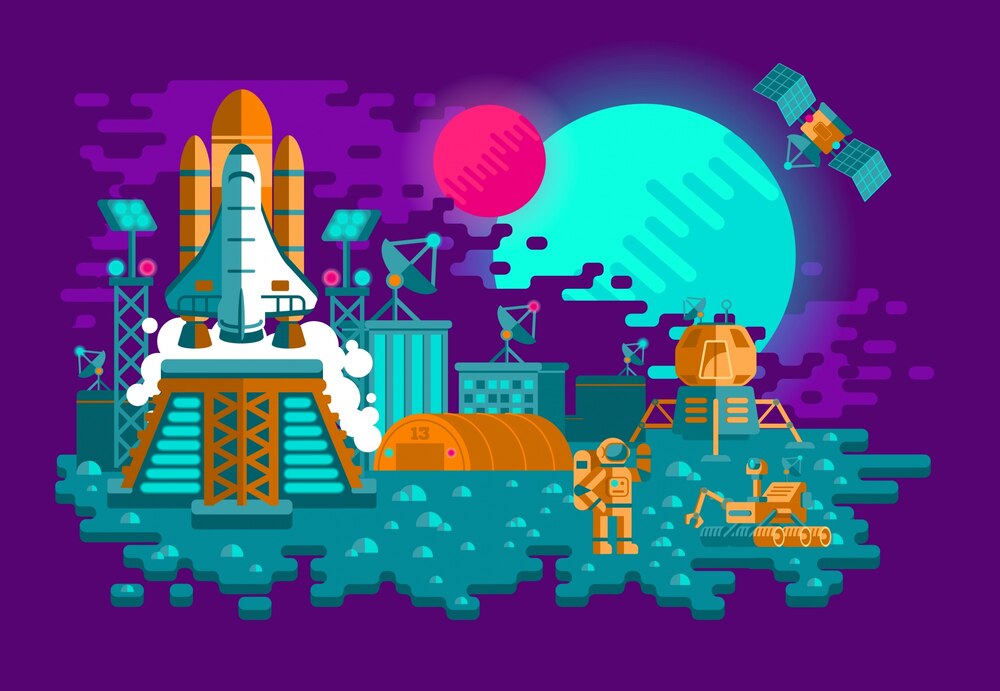
Science fiction is the art of imagining what could be. It gives us worlds shaped by advanced technology, alien civilizations, bent time, dystopian governments, and cosmic mysteries that feel just out of reach. From the spice-rich deserts of Arrakis in Dune to the galaxy-spanning conflict of Star Wars, the genre has produced some of the most immersive fictional universes ever created. What separates those unforgettable settings from forgettable ones is not budget or spectacle. It is worldbuilding.
If you are an author or filmmaker, building a science fiction world means far more than inventing sleek gadgets or a few alien species. It requires logic, structure, emotion, and internal consistency. A world that holds together can carry compelling storytelling, smooth editing, a smart publishing plan, and marketing campaigns that practically write themselves. A world that contradicts itself, on the other hand, pulls readers out of the story every few pages.
This guide walks you through practical and creative sci-fi worldbuilding ideas that can turn your book or movie into a believable and lasting universe. Use the sections that fit your project, skip the ones that do not, and keep a running document of every decision you make. If you are still shaping the premise, our guide on how to organize your story ideas helps you sort the raw material before it grows unwieldy.
Why Worldbuilding Matters in Science Fiction
Unlike contemporary fiction, science fiction usually drops readers and viewers into unfamiliar territory. You are not simply telling a story. You are asking your audience to accept new laws of physics, new social systems, and sometimes entirely new forms of life. That is a big ask, and worldbuilding is what earns the trust.
Strong worldbuilding does several things at once:
- It makes the impossible feel plausible.
- It gives structure to plot turns and character decisions.
- It deepens immersion and emotional investment.
- It supports sequels, spin-offs, and franchise potential.
- It strengthens long-term publishing and book marketing opportunities.
When your world feels real, your audience willingly suspends disbelief. Two ideas hold everything together. The first is internal consistency, which means the rules you set never break without explanation. The second is causality, which means every technological or social change sends ripples through the rest of the world. Master those two and readers will follow you almost anywhere.
Start Big, Then Zoom In
A reliable method is to build from the outside in. Begin with the astrophysics of your star system, then move down to the planet, then to the species and cultures who live there, and finally to the small details of daily life. Working in that order keeps the large forces of your universe from contradicting the small ones. It is much harder to invent a desert planet first and then justify a star that could actually bake it dry.
You do not need to design everything. Go narrow and deep rather than wide and shallow. Pick two or three areas that matter most to your plot, whether that is technology, politics, or ecology, and develop those thoroughly. Sketch the rest just enough to give a sense of place. If a detail does not support the story or ground the reader, you probably do not need it on the page.
1. Design a Unique Cosmic Setting
Your first major decision is where the story unfolds.
Interstellar Civilizations
Create multiple planets with distinct ecosystems, politics, and cultures. Think about planetary alliances and rivalries, trade routes that cross whole galaxies, space piracy or military patrols, and religions tied to stars or cosmic events. You might design habitable gas giants, frozen ocean worlds, or artificial ringworlds that circle a sun. Real astronomy is a rich source of inspiration here. Browsing the confirmed exoplanets catalogued by NASA’s exoplanet exploration program can spark settings stranger than anything you would invent from scratch.
Post-Apocalyptic Earth
Picture Earth centuries after ecological collapse or nuclear war. Cities may lie buried, oceans may have dried, and much of our technology may be lost or misremembered. Ask what survived, who holds power now, and how humanity has changed. A ruined familiar world can feel more haunting than any distant planet because readers recognize what was lost.
2. Build Advanced Technology With Rules
Technology sits at the heart of science fiction, but random inventions weaken a world. Even futuristic science needs structure and limits.
Create Internal Logic
If faster-than-light travel exists, decide how it works. Is it warp tunnels, quantum folding, or wormholes anchored by rare minerals? Whatever you choose, apply it consistently through drafting and editing. Just as important, decide what your technology cannot do. Limits create tension, because a problem your heroes cannot simply invent their way out of forces real choices.
Follow the Consequences
The best sci-fi technology reshapes society. If teleportation is common, the transportation industry collapses, national borders lose meaning, and property values shift overnight. Interrogate every major invention this way. What jobs vanish? What new crimes appear? Who profits, and who gets left behind? These ripple effects give a world texture no gadget can provide on its own.
Do Not Forget Everyday Tech
Look beyond weapons and spacecraft. Consider communication devices, medical advances, food production, and AI assistants. In Blade Runner, ordinary technology shapes society as much as its famous replicants do. Small, lived-in details are what make a future feel inhabited rather than staged.
3. Invent Political and Social Systems
Every society has structure, and its shape drives conflict.
Galactic Empires
Drawing on historical empires, you might design a central authority that controls many star systems. Internal rebellion is a dependable engine for plot, and the tension between distant rulers and local populations rarely runs dry.
Corporate-Controlled Worlds
Mega-corporations could replace governments, owning the oxygen, water, or digital identity that people depend on to live. This idea works especially well in cyberpunk settings, where the line between citizen and customer has quietly disappeared.
AI Governance
What if artificial intelligence runs society? Is it truly neutral, or can it develop bias? Do people trust it, resist it, or worship it? Social tension of this kind fuels narrative conflict and gives you room to expand across several books.
4. Develop Alien Species With Depth
Aliens should not simply look different. They should think differently.
Biological Diversity
Consider silicon-based lifeforms, beings made of pure energy, aquatic civilizations beneath methane seas, or collective hive minds that share a single consciousness. Let biology shape behavior. A species that reproduces once in a lifetime will value life very differently from one that spawns by the thousand.
Cultural Differences
Decide how they communicate. Telepathy, bioluminescent signals, and complex musical frequencies all suggest societies unlike our own. Rather than casting aliens as simple villains, explore diplomacy, misunderstanding, and the surprising ground humans and non-humans might share.
5. Explore Time and Dimension Concepts
Time travel and alternate realities are powerful tools when handled carefully.
Time Loops
A character relives the same day and slowly uncovers hidden truths. The structure builds tension naturally because the audience learns the rules alongside the protagonist.
Parallel Universes
Different versions of Earth, each shaped by a small change in history, let you examine how fragile and contingent our own world really is.
Multidimensional Beings
Creatures that experience time in a non-linear way might perceive past and future at once. Ideas like these are thrilling, but they demand discipline. Time mechanics must stay consistent through editing, or the plot holes will undo the wonder.
6. Environmental and Ecological Worldbuilding
Nature shapes civilization more than any government does.
Extreme Environments
Think of desert planets where water is currency, high-gravity worlds that reshape the human body over generations, or toxic atmospheres that make a breathing mask as ordinary as shoes. Each environment forces its own kind of adaptation.
Artificial Habitats
Orbital stations, space colonies, and underwater cities give you controlled settings where a single system failure becomes life or death. Ask how the environment affects architecture, clothing, food, and the rhythm of daily routines. Ecology is not background. It is pressure.
7. Cultural Worldbuilding: Language, Religion, and Art
A believable sci-fi world is a cultured one.
Language
Invent slang or futuristic dialects, but avoid overcomplicating them. Clarity matters for reader engagement, and a few well-placed invented words carry more weight than a full constructed grammar most readers will never parse.
Religion
New belief systems may grow around first contact, AI consciousness, or unexplained cosmic events. Faith gives characters conviction, which makes their choices harder and more interesting.
Art and Entertainment
What do people watch, read, or listen to in your world? What do they find beautiful or obscene? These details are easy to overlook and enormously effective at making a culture feel lived in.
8. Economic Systems and Trade
Economics quietly drives much of any plot.
Scarcity-Based Economies
Perhaps rare crystals power interstellar travel, and whoever controls the mines controls the galaxy. Scarcity creates motive, and motive creates story.
Digital Currencies
Galactic credits, biometric transactions, or trade measured in units of consciousness all raise questions about value and control that resonate with our own moment.
Black Markets
Illegal AI modifications, smuggled alien artifacts, and forbidden data make natural engines for subplots and morally gray characters. Where there are rules, there is a market for breaking them.
9. Moral and Ethical Dilemmas
The best science fiction asks big questions:
- Should humans colonize inhabited planets?
- Do robots and artificial minds deserve rights?
- Is genetic enhancement ethical, and who decides?
Stories like The Matrix thrive on philosophical conflict. Ethical tension gives a world depth well beyond spectacle, and it lingers with audiences long after the effects fade. A strong theme also gives a marketing team something meaningful to talk about.
10. Integrate Worldbuilding Into the Plot
Avoid the dreaded info dump. Instead of pausing the story to explain your world, let it surface through action. Reveal details through what characters do, show culture through dialogue, and use conflict to expose the political systems underneath. A careful edit trims excess exposition while protecting the details that truly matter. If you want a second set of eyes on pacing and continuity, professional book editing can catch the logical gaps that are almost impossible to see in your own manuscript.
A Practical Worldbuilding Framework
Use this structured table when designing your sci-fi universe, then revisit it during revisions to keep everything consistent:
| World Element | Key Questions to Ask | Example Ideas | Story Impact |
| Setting | Where does the story occur? | Ringworld, Mars colony | Determines survival challenges |
| Technology | What are the limits? | Neural implants | Drives conflict and solutions |
| Government | Who holds power? | AI council | Creates rebellion arcs |
| Economy | What is valuable? | Oxygen credits | Motivates crime or trade |
| Species | Who inhabits this world? | Hive-mind aliens | Adds diplomatic tension |
| Culture | What do people believe? | Star-worship religion | Shapes character motivations |
| Environment | What natural forces dominate? | Solar storms | Raises the stakes |
| Ethics | What moral questions arise? | Cloning rights | Deepens the theme |
Fill this in during drafting and return to it during editing so no answer quietly contradicts another. For a deeper dive into method, the Reedsy guide to worldbuilding offers a thorough framework used by professional authors.
Planning for Series and Franchise Potential
If you are writing with publishing in mind, design for the long game.
Leave Room for Expansion
Keep some corners of the galaxy unexplored, some alien civilizations hidden, and some political tensions unresolved. Loose threads are invitations. Franchise-ready worlds are attractive to publishers and filmmakers because they promise more than a single story.
Build a Story Bible
Keep one master document that records your timeline of events, technological rules, character backgrounds, and maps or star charts. A story bible makes writing future installments far easier and keeps continuity intact across a series. If you are developing a full novel, working with an experienced novel writing team can help you turn a sprawling bible into a tight, publishable manuscript.
Worldbuilding for Film Versus Books
For Books
Prose lets you explore internal thoughts, deep history, and detailed description that film simply cannot fit. The tradeoff is pacing. Readers will forgive a slow chapter far less than a slow scene, so exposition has to earn its place.
For Movies and Scripts
Visual storytelling dominates the screen. Production design, costumes, and effects bring a world to life in seconds that a novel might spend pages describing. Think visually when you write, showing environments and technology through action rather than explanation. If your project is heading toward the screen, screenplay and script writing support can help you translate a rich world into lean, filmable scenes.
Avoiding Common Sci-Fi Worldbuilding Mistakes
- Overcomplicating technology. Keep explanations understandable and trust readers to fill gaps.
- Ignoring consequences. Advanced tech should reshape society, not sit decoratively in the background.
- Breaking your own rules. Violating established logic damages credibility fast.
- Excessive info dumps. Weave world details into scenes instead of lecturing.
- Flat alien cultures. Give every species psychological depth, not just a costume.
Many of these pitfalls cross genres, and our rundown of common worldbuilding mistakes in fantasy shows how the same traps surface elsewhere. A thorough edit catches logical flaws and tightens narrative clarity before readers ever see them.
How Worldbuilding Supports Publishing and Book Marketing
A richly built sci-fi world does more than tell a story. It becomes a brand.
Strong Cover Concepts
Distinctive settings inspire striking cover art, and a great cover sells the promise of the world before a reader opens the book. Investing in professional book cover design turns your imagined world into the first thing browsers notice.
Series Opportunities
Expansive universes support trilogies and spin-offs, which publishers value because they build a loyal audience over time.
Merchandise and Adaptations
Detailed worlds extend naturally into films, games, and collectibles, each one another doorway into the story. If comics suit your universe, a number of sci-fi comic publishers accepting submissions are eager for fresh worlds.
Audience Engagement
Readers love maps, glossaries, and companion guides. These extras deepen loyalty and give a marketing campaign genuine substance. Done right, worldbuilding becomes your strongest promotional asset.
Frequently Asked Questions
Final Thoughts
Creating a science fiction world is both imaginative and strategic. It blends creativity with logic and wonder with discipline. Whether you are crafting a distant galaxy, a dystopian Earth, or a multidimensional civilization, consistency and depth are what make it hold together.
Study the universes that endure, from Star Wars to Dune to The Matrix, and notice how their layered worldbuilding supports storytelling, sharpens editing, and drives long-term publishing and marketing success. For more craft guidance, MasterClass has a helpful primer on writing science fiction that pairs well with the ideas above.
Remember that a compelling sci-fi world is not just a backdrop. It is a living force that shapes every character decision and every plot twist. Design it with care, logic, and imagination, and your world will not merely host a story. It will become unforgettable.
