






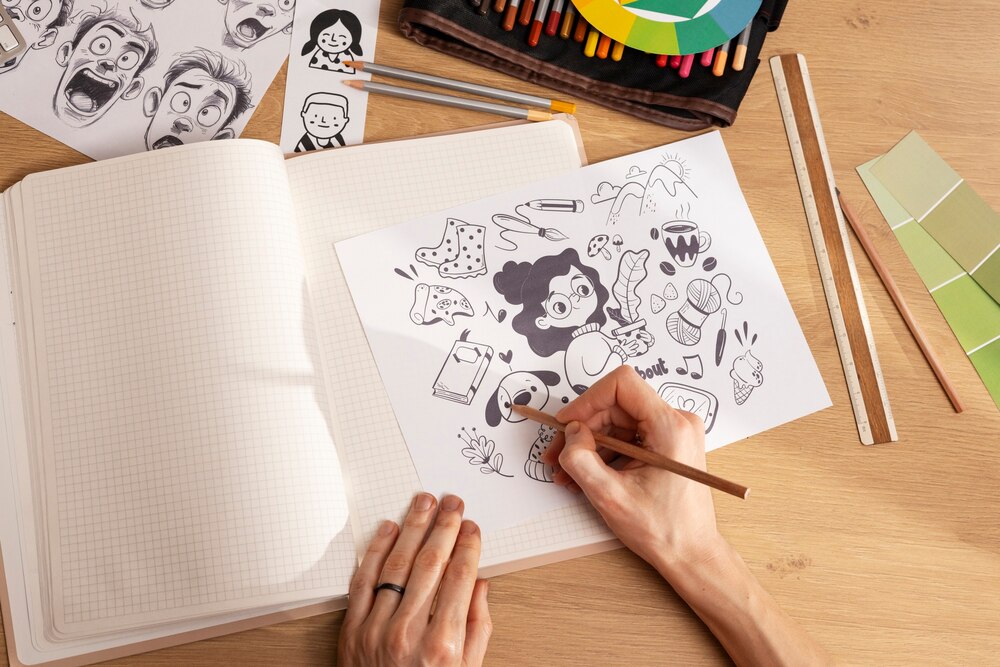
Creating a comic book from scratch is one of the most rewarding creative projects you can take on, because it blends the craft of storytelling with the punch of visual art. For new creators, though, the process can feel intimidating, in much the same way it does for anyone writing a book with no experience. Where do you start? How do you turn a loose idea into a working script? And how do you make characters feel alive across a handful of small panels? This guide walks you through every stage of writing your first comic, from the initial concept to a finished page that is ready to print or post online. Whether you plan to draw the art yourself, collaborate with an illustrator, or lean on professional writing and illustration support, you will leave with a clear roadmap.
What a Comic Book Actually Is
A comic book is not simply a story with pictures attached. It is a distinct medium where words and images share the work of telling a story, and neither one carries the load alone. The magic lives in the gutter, the small gap between panels, where the reader’s imagination fills in the motion and time that the art only implies. Before you write a single line, it helps to know the building blocks you will be arranging.
- Panels: the framed boxes that capture a single moment or beat of action.
- Speech balloons: rounded shapes that hold spoken dialogue.
- Captions: text boxes used for narration, time stamps, or a character’s inner thoughts.
- Sound effects: onomatopoeic words such as CRACK, BANG, or WHOOSH that add impact.
- The gutter: the space between panels where the reader mentally connects one moment to the next.
- Visual pacing: the rhythm of the story, shaped by panel size, layout, and how many beats you place on a page.
Understanding how these pieces cooperate is the real first step, because a comic script is a set of instructions for arranging them. If you want a deeper look at the vocabulary and grammar of the form, the reference guides at Reedsy’s comic book script guide are a strong starting point.
Define Your Genre and Audience First
Two decisions influence everything that follows, so make them early. The first is genre. A superhero epic, a slice of life romance, a sci-fi adventure, and a horror one-shot each ask for a different tone, pace, and visual language. The second is audience. A comic for young readers uses simpler layouts, brighter art, and gentler stakes than a gritty thriller aimed at adults.
Pinning down genre and audience keeps your choices consistent. It tells you how dense your dialogue should be, how dark your themes can go, and even how many panels belong on a page. If you are aiming at younger readers specifically, it is worth studying how pacing and word count differ in children’s book writing, since many of the same instincts about clarity and rhythm apply to all-ages comics.
Step by Step: How to Write a Comic Book for Beginners
1. Start With a Concept You Believe In
Every comic begins with an idea strong enough to carry months of work. Before you commit, answer a few questions. What is your comic about at its core? Who are the central characters? What is the main conflict or journey? What theme do you want readers to feel by the last page? A sharp concept can usually be boiled down to a single sentence, the same idea-first habit that anchors planning your first book. For example: a teenage outcast learns she can walk through other people’s dreams, but every visit costs her a memory of her own. If your one-line pitch makes you want to keep going, you have something worth building.
2. Build Characters Readers Remember
Characters drive the story, so give your main cast real depth. Write short profiles that cover name, age, and appearance, along with backstory, motivation, personality, and, crucially, flaws. Interesting characters have contradictions and something to lose. They should grow and stumble across the arc so readers form an emotional bond with them.
Because comics are visual, also design how each character looks and moves. Think about wardrobe, hairstyle, posture, and recurring visual motifs that let a reader recognize them at a glance. A consistent silhouette is one of the most useful tools an artist has, so build it into the character from the start.
3. Outline the Story in Three Acts
Comic readers expect the same satisfying shape they get from a novel or film, and the classic three-act structure delivers it, the very framework behind writing a first novel. In the setup, you introduce the world, the cast, and the central conflict. In the confrontation, you raise the stakes, throw obstacles at your protagonist, and push their arc forward. In the resolution, you deliver the climax and land an ending that feels earned. Sketching this map before you script keeps your pacing balanced, whether you are writing a single issue or planning a longer series.
4. Write the Comic Script
Scripting a comic is not like writing prose, because you are describing images panel by panel and only then adding the words characters say. Number every page and every panel so your artist, or your future self, knows exactly what to draw and in what order. A simple, readable layout looks like this:
- Page 1, Panel 1: A rain-soaked alley at night. A shadowy figure stands at the far end, half hidden.
- Caption: Midnight. The city of ashes.
- Panel 2: Close on a gloved hand clutching a sealed envelope.
- Figure (off panel): It is finally time.
Keep each panel focused on one clear moment. Resist the urge to cram in extra dialogue or overload the description. A widely used rule is to describe action, not emotion. Instead of writing that a character is furious, write that he slams his fist into the wall until the mortar cracks. That show, do not tell approach gives your artist something concrete to draw. If you have written screenplays before, the discipline will feel familiar, and our team’s screenplay and script writing services can help you translate cinematic instincts onto the comic page.
5. Think Like a Camera
Even if you never plan to draw, you have to direct the reader’s eye. Comics rely on framing choices that work much like film. Wide establishing shots set a scene, medium shots carry conversation, and tight close-ups deliver emotion. Panels are read left to right and top to bottom in most languages, so plan the flow so nothing forces the eye to backtrack. Note transitions clearly too, because a jump from one location or time to another needs a visual cue the reader can follow.
6. Plan Page Layout and Pacing
Most comic pages hold roughly four to six panels, but that number should serve the story rather than a rule. A cluster of small panels speeds the reader up and suits tense, rapid action. A large panel or a full splash page slows things down and signals an important moment. A silent panel with no words at all can hold a beat of suspense or grief better than any caption. Vary these deliberately, and your pages will breathe.
7. Collaborate on the Art
If you are a writer rather than an artist, you will need help bringing the visuals to life, and a good collaboration rests on clear communication. Give your artist character reference sheets, mood notes for each scene, and a feedback loop for revisions. Professional illustrators understand paneling, composition, and character design, and many creators hand off penciling, inking, coloring, and even cover art to specialists. If you are shaping a cover or key art, our book cover design services can help you make a first impression that sells the story before a reader opens it.
8. Add Dialogue, Captions, and Lettering
Once the art is locked, layer in the text. Dialogue in comics is sparse by design, so keep every line tight and true to the character’s voice. Use captions sparingly for narration or inner thoughts. Let sound effects punctuate the action without swamping it. Lettering is a craft of its own: choose clean, legible fonts, and place balloons so they guide the eye in the correct order and never cover important art. In comics, restraint almost always reads better than clutter.
9. Revise, Edit, and Test on Readers
No first draft is finished. Read your comic as a writer and again as a reader who knows nothing about your intentions. Does the story flow without confusion? Are characters consistent in voice and design? Is any panel overcrowded or unclear? Is the text clean and correctly spelled? Beta readers, whether comic fans, fellow writers, or artists, will catch problems you have gone blind to. For a polished final product, a professional pass through professional book editing can catch continuity slips and tighten dialogue before you commit to print.
10. Format for Print or Digital Publishing
When the pages are done, prepare them for their destination. For print, work at 300 DPI, set your color to CMYK, and add proper bleed and trim margins so nothing important sits near the edge. For digital, format for screen resolution and compress files without visibly degrading the art. Then decide how readers will find your work, whether that is a webcomic platform, a crowdfunding campaign, or a self-publishing route. Amazon’s self-publishing help center at Kindle Direct Publishing is a practical resource for file specs and distribution options.
Writing and Illustration Support for New Creators
For many beginners, producing an entire comic alone is simply too much, and there is no shame in getting help. Creative writing and illustration teams can supply character concept art from your descriptions, full page layouts including pencils, inks, and color, and professional lettering and formatting. If you have a strong idea but struggle with structure or dialogue, scriptwriting support can shape it into a publishable form. That kind of collaboration lets you polish your story, visualize your world, and adapt your script into finished pages, which is especially valuable on a first project. Once your comic is ready to reach readers, professional book publishing services can guide you through distribution, formatting, and getting your work into the right hands.
Common Mistakes New Comic Creators Should Avoid
- Overwriting: stuffing too much dialogue into a single panel until the art disappears behind text.
- Vague descriptions: leaving the artist guessing with scenes that lack concrete detail.
- Flat characters: people who never change and all sound the same.
- Ignoring pacing: uneven panel flow that breaks the reader’s immersion.
- Starting too big: attempting a hundred-page epic before finishing a short story.
- Skipping revision: publishing before the script and art have been edited.
Tips for Staying Inspired
- Read widely across classic, indie, and international comics to see how different creators solve problems.
- Join a comic creator community for feedback and accountability.
- Practice by scripting short one or two page comics before committing to a full issue.
- Keep a sketchbook or idea journal so fleeting concepts do not slip away.
- Study interviews and craft essays from working professionals, such as those on MasterClass on writing a comic book.
- Do not fear mistakes, because every finished project teaches you more than a dozen unfinished ones.
Frequently Asked Questions
Conclusion
Writing your first comic book brings together storytelling, visual thinking, and collaboration into one bold creative venture. When you understand how the medium works, build characters worth following, outline a clear arc, and script one focused moment per panel, you give yourself a real foundation to build on. Start small, revise honestly, and lean on professional writing, editing, and illustration support when you need it. Embrace the process, stay curious, and above all, keep creating.
