
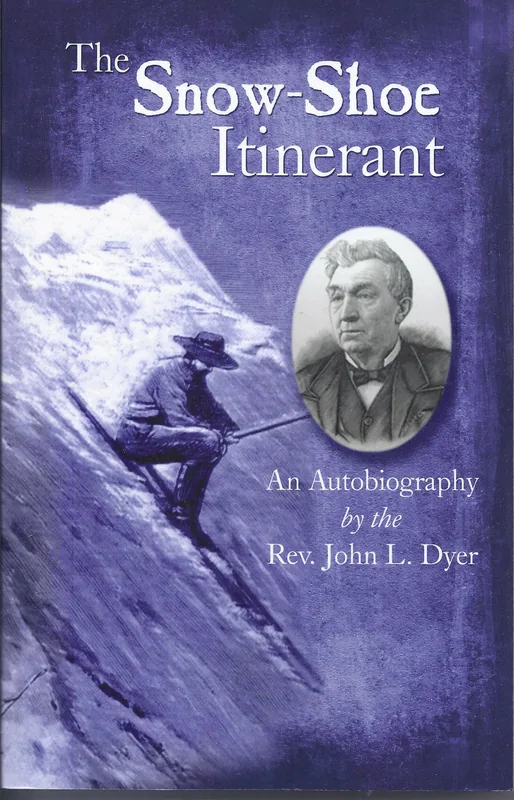
The Snow Shoe Itinerant
Reverend John Dyer, an intrepid Methodist minister, cameto Colorado in 1861 at the ripe old age of forty-nine, but soon fit in as one of the "boys" in the remote mining towns he served. In The Snow-shoe Itinerant, Dyer tells captivating tales of the sights, sounds, people, and events he encountered and experienced. His stained glass portrait is in the dome of the Colorado Capitol Building.
- Published
- 2008
- ISBN
- 978-1-932738-65-0
- Pages
- 408
- Place
- Colorado
- Publisher
- Western Reflections Pub. Co.
- Listed at
- $32.95
Publication details from Open Library. The price shown is the last one on record and is historic, not a current offer.
- Direct from us info@westernreflectionspublishing.com or (336) 565-6915. We pack and post from Lake City.
- Amazon Buy from Amazon.
- Any bookshop Quote ISBN 978-1-932738-65-0 and your local bookseller can order it.
About this book
The Snow Shoe Itinerant is the autobiography of Reverend John L. Dyer, the Methodist minister later known in Colorado as Father Dyer. He came to Colorado in 1861 at the age of forty-nine, according to the description, but soon fit in as one of the boys in the remote mining towns he served.
In his own words, Dyer tells tales of the sights, sounds, people and events he met along the way. The famous part of his work was winter travel. A biography on Wikipedia says he carried mail between Alma and Leadville over 13,188-foot Mosquito Pass on what were really Norwegian skis, and a Breckenridge heritage page says he often set out in the early hours while the snow was still firm.
Our catalogue lists this edition at 408 pages. Catalogue subjects include biography, Methodist Episcopal Church, clergy, and frontier and pioneer life.
Who it is for
Colorado history readers and anyone interested in the church on the mining frontier will want Dyer's own account. Breckenridge, Fairplay and Leadville researchers can read it for the mail routes and camps he knew. Skiers who like the sport's origins will find the book behind the nickname.
Ways to use this book
Following the mail route
Look at a map of Alma, Mosquito Pass and Leadville, then read the Park County and Leadville articles for the camps along the way. Mosquito Pass is high and snow can linger, so check conditions with a local office before any trip.
Visiting Breckenridge with a church history in mind
The heritage page says a local church and a nearby ghost town carry his name. Read it first, then walk the historic district and look at what's still standing.
Telling the ski story to younger readers
Pair the Summit Historical feature with a short talk on how winter travel worked before roads. It gives a classroom or family a concrete, local example of a man crossing mountains for his work.
Go deeper
Dyer's autobiography covers his years in the Colorado mining camps and his winter mail runs on skis. These resources cover the camps he served, the Breckenridge church and local history groups.
Father Dyer and Dyersville, Breckenridge Heritage Alliance
A history page that says Dyer was a Methodist minister who came west in 1861, and left a church and a ghost town that still carry his name.
Colorado 150: Father Dyer, Summit Historical Society
The society's January feature says he crossed the Continental Divide on homemade skis with mail and sermons, and that a mountain peak bears his name.
Park County, Colorado Encyclopedia
Covers South Park, the Mosquito Range and Buckskin Joe, one of the camps on Dyer's circuit. Good background for the country he crossed.
Good to know
Who was John L. Dyer?
Why is he called the snow-shoe itinerant?
Which towns did he serve?
How long is this edition?


Have a book of your own?
This is the kind of book the house publishes: regional history, biography, memoir and the stories that belong to a place. Send us yours and a person will read it.