






Stories are the oldest form of communication we have. Long before written language, people gathered around fires and passed down lessons, warnings, and dreams through the tales they told. That habit never left us, and it never will, because human beings are wired to think in narrative. We remember a good story far longer than we remember a list of facts. That is exactly why understanding the elements of a good story matters so much, whether you are drafting your first short story or planning a full length novel.
A good story is one that readers instantly recognize as outstanding, even when they cannot explain why. The reason is simple. Great stories follow certain rules and conventions that weaker stories ignore. When you learn what those building blocks are and how they fit together, you gain the ability to hook readers from the first page and keep them turning to the last. In this guide, put together by the team at Western Reflections Publishing, we break down every element that goes into a memorable story and share practical tips you can use in your own writing.
What Are the Elements of a Good Story?
The elements of a good story are the core components that every compelling narrative shares. Think of them as the ingredients in a recipe. You can adjust the amounts and add your own flavor, but leave one out entirely and the whole dish falls flat. The classic elements are setting, characters, plot, conflict, theme, point of view, and resolution. On top of those, the skill of the writer and the overall structure hold everything together.
None of these pieces works alone. A brilliant character stuck in a story with no conflict feels aimless. A twisting plot with cardboard characters leaves readers cold. The magic happens when each element supports the others, which is why the best writers treat storytelling as a craft to be practiced rather than a gift you either have or you do not. Let us walk through each element in turn.
The Core Elements of a Good Story
1. The Skill of the Writer
We do not usually like to be so blunt, but this cannot be ignored. Perhaps the most important factor in any good story is the skill of the writer telling it. A skilled writer can take an ordinary premise and turn it into something that touches the hearts and minds of everyone who picks up the book. The same idea in unskilled hands can feel dull and lifeless.
The good news is that writing is a learnable skill. It grows through reading widely, drafting often, and revising honestly. Before you commit to a book, commit to writing shorter stories and studying how your favorite authors handle scenes, dialogue, and pacing. If you want to shortcut the learning curve or you simply do not have the time, our professional novel writing services pair you with experienced authors who know how to bring a story to life.
2. Setting
Setting is the where and when of your story. It covers the physical location, the time period, the culture, the weather, and the mood that surrounds your characters. A strong setting does far more than decorate the background. It shapes how characters behave, creates atmosphere, and can even become a force in the plot, the way a brutal winter or a crowded city pushes people to act.
You do not need pages of description to build a vivid world. A few precise, sensory details often work better than a long inventory, and avoiding heavy information dumps keeps readers grounded in the moment. Let readers smell the salt air, hear the floorboards creak, or feel the heat rising off the pavement. When the setting feels real, readers sink into the story and stop noticing they are reading at all.
3. Characters
Via Reedsy.com
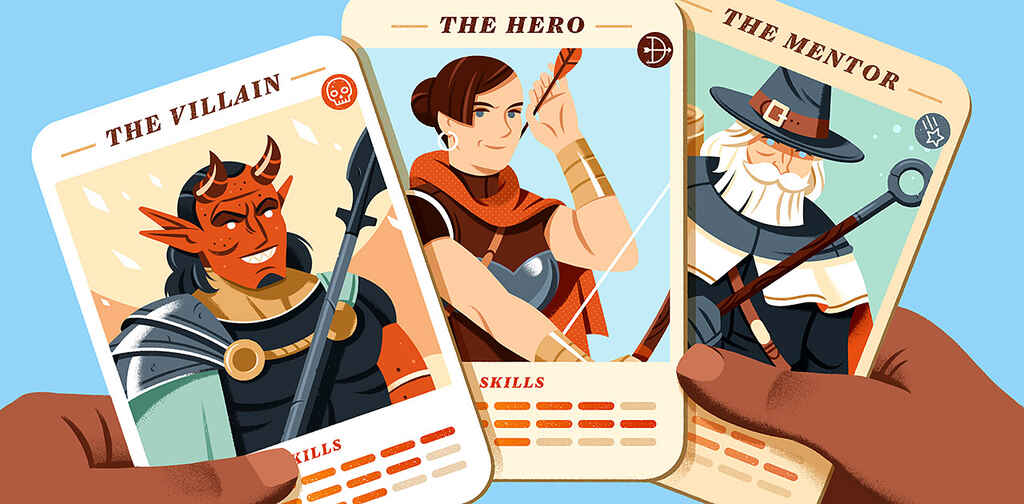
Characters are the backbone of your plot. Readers do not fall in love with events, they fall in love with people, so your protagonist and antagonist both need to be believable, layered, and interesting. A great character has clear goals, real flaws, and the ability to change over the course of the story, and developing well rounded characters is a craft worth studying in its own right. Even minor characters should feel like they have lives beyond the pages you show them on.
Never write your characters carelessly, because dull or flat characters can sink an otherwise strong plot. Give them wants that clash with the wants of others. Show their fears, their contradictions, and the small habits that make them human. If you are struggling to make a character come alive, an outside eye helps enormously, which is why many authors turn to a developmental editing service to strengthen character arcs before publication.
4. Plot
The plot is the sequence of events that make up the action of your story. A satisfying plot usually moves through a clear arc. It opens with an inciting incident that sets things in motion, builds through rising action and complications, reaches a climax where everything comes to a head, and then settles into falling action and resolution. This shape gives readers a sense of momentum and payoff.
The best way to craft a strong plot is to know how it ends before you get lost in the middle. When you understand your destination, every scene can push toward it. Cut anything that does not move the story forward, raise the stakes, or reveal something about your characters. A tight, purposeful plot keeps readers invested and eager to find out what happens next.
5. Conflict
Conflict is the engine of every story. Without it, there is no tension, and without tension, readers have no reason to keep going. Conflict is the struggle between opposing forces, and it comes in several forms. It can be a clash between two characters, a battle against nature or society, or an internal struggle inside a character’s own heart and mind. Many of the richest stories layer several kinds of conflict at once, and there are plenty of techniques for creating conflict between characters that you can weave together.
Good conflict raises a question that readers desperately want answered. Will she escape? Will he forgive his brother? Can they stop the flood in time? The more you make readers care about the outcome, the harder it becomes for them to put the book down. Keep the pressure on your characters, deny them easy victories, and let the conflict build steadily toward the climax.
6. Theme
Theme is the deeper meaning that runs beneath the surface of your story. It is the idea or truth about life that readers carry with them after they finish reading. Common themes include love, loss, courage, redemption, ambition, and the cost of freedom. A theme does not need to be stated outright. In fact, the best themes are woven quietly through the choices your characters make and the consequences they face.
You do not have to decide your theme before you write. Many authors discover what their story is really about only after a draft or two. What matters is that the events and the ending feel like they add up to something. When a story has a clear thematic heart, it lingers in the reader’s mind and gives the whole narrative a sense of purpose.
7. Point of View
Point of view is the lens through which the story is told, and it shapes everything about how readers experience the events. A first person narrator pulls readers close and lets them feel the story from inside one character’s head. A third person limited view stays close to one character while keeping a slight distance, and a third person omniscient view can move freely between many characters and reveal things no single person could know.
Choosing the right point of view is one of the most important early decisions you will make. Ask yourself whose eyes will make the story most powerful and whose knowledge, or lack of knowledge, will create the most tension. Once you choose, stay consistent, because head hopping and sudden shifts confuse readers and break the spell of the story.
8. Structure and Pacing
Structure is how you arrange the pieces of your story, and pacing is how quickly or slowly you move through them. You need to know when to introduce the conflict, how much time to spend on the middle, and how long to linger on the conclusion. Get the balance right and your story flows in a way that feels effortless to read. Get it wrong and readers grow bored or feel rushed.
Vary your pacing on purpose. Slow down for emotional beats and quiet character moments, then speed up for action and high tension. Chapters and scene breaks are useful tools for controlling rhythm. If you want to dig deeper into arranging your narrative, the guide to story structure from Reedsy lays out several popular frameworks you can adapt to your own book.
9. A Satisfying Resolution
The ending of a story should tie up the events that came before it as smoothly as possible. A strong resolution addresses the central conflict, answers the questions readers have been carrying, and brings the characters to a place that feels earned. That does not mean everything must be wrapped in a neat bow. Some of the most powerful endings are bittersweet or leave a little room for the imagination. What matters is that the conclusion feels true to the story you told.
A lackluster ending can undo everything that came before it, because readers invest so much emotion by the time they reach the final pages. Avoid loose threads, rushed explanations, and events that come out of nowhere. It is far better to trim unnecessary plot points during the editing stage than to drag them into the conclusion. Execute the ending with care and your readers will remember the whole book fondly.
5 Tips to Hook Your Readers
Knowing the elements is one thing. Using them to grab a reader by the collar on page one is another. Here are five practical tips that help you hook readers and keep them turning pages.
- Open in the middle of something. Start with action, tension, or a question rather than a slow warm up. Give readers a reason to keep reading within the first few paragraphs.
- Make the stakes clear early. Readers stay invested when they understand what a character stands to gain or lose. Show why the outcome matters.
- Show, do not tell. Instead of announcing that a character is nervous, show the shaking hands and the missed words. Let readers draw their own conclusions.
- End chapters on a hook. Close scenes on a question, a reveal, or a moment of tension so readers cannot resist starting the next one.
- Trust your reader. Leave a little unsaid. Readers enjoy filling in the gaps, and a story that respects their intelligence feels far more rewarding.
Once your manuscript is written and polished, the next step is getting it into readers’ hands. Our professional book editing services refine your prose to a professional standard, and our full book publishing services handle everything from formatting to distribution so your finished story reaches the audience it deserves.
Frequently Asked Questions
Conclusion
Writing a great story comes down to understanding the essential elements and weaving them together with care. Setting, characters, plot, conflict, theme, point of view, structure, and a satisfying resolution each play a part, and the skill of the writer ties them all together. When one piece is weak, the whole story feels it, which is why you should never compromise on the fundamentals. For a broader look at how the pros approach these building blocks, the breakdown of the essential elements of a good story from MasterClass is well worth a read, and the creative writing resources at the Purdue Online Writing Lab offer plenty of practical exercises.
Master these elements, practice them often, and you will be well on your way to writing stories that hook readers and stay with them long after the final page. We hope this guide helps you craft your next unforgettable tale.
