






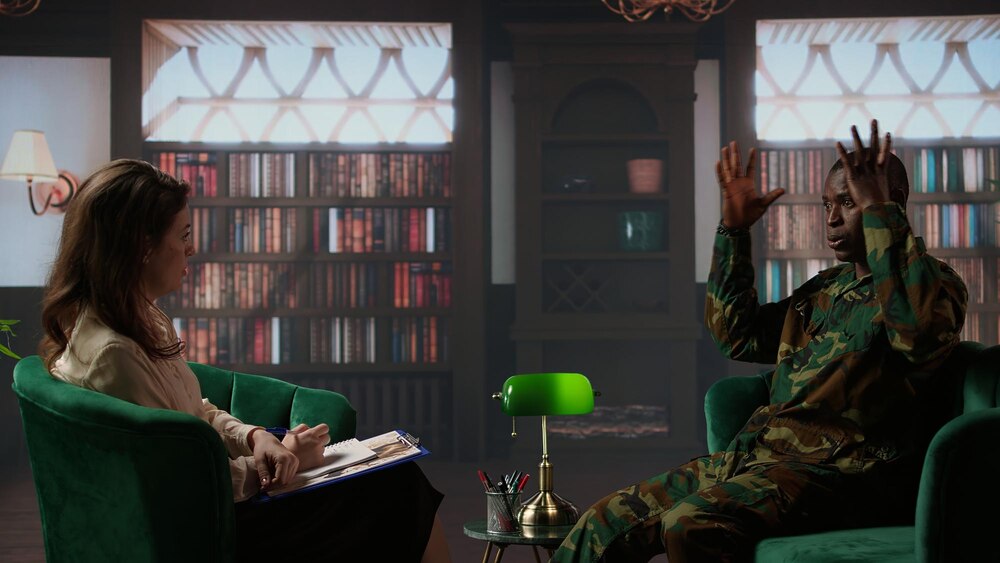
Psychological thrillers have a quiet, unsettling power. They crawl under the skin, whisper doubts into the reader’s mind, and blur the line between truth and illusion until you are no longer sure which one you have been trusting. Unlike action-heavy thrillers that rely on chases and gunfire, psychological suspense thrives on unreliable narrators, buried trauma, shifting realities, moral ambiguity, and shocking twists that force readers to rethink everything they thought they understood.
If you are a writer hunting for compelling psychological thriller story ideas with a twist, this guide gives you deep, layered concepts you can grow into novels, novellas, or screenplays. Each idea leans on tension, character psychology, and a final revelation that reframes the entire narrative. You will also find craft guidance on how to plant clues, control point of view, and make your ending feel both shocking and inevitable. Whether you plan to write the book yourself or work with professional novel writing services, the goal is the same: a story that haunts readers long after the last page.
Let’s step into twisted minds and darker possibilities.
What Makes a Psychological Thriller Truly Twisted?
Before we explore specific ideas, it helps to understand the ingredients that separate a gripping psychological thriller from an ordinary suspense story. The genre lives inside the mind of its characters, which means the real battleground is perception, memory, and guilt rather than physical danger alone.
- Unreliable narrator. The protagonist hides, distorts, or misremembers the truth, so the reader can never fully trust the story being told.
- Moral complexity. There are no clean heroes or obvious villains, only flawed people making choices under pressure.
- Emotional manipulation. Gaslighting, obsession, paranoia, and trauma shape how characters see the world.
- Slow-burn suspense. Tension builds gradually, one uneasy scene at a time, rather than exploding all at once.
- Reality shifts. The final twist recontextualizes everything, so a reread reveals a completely different story.
A powerful twist never appears from nowhere. It is carefully seeded through subtle clues, small inconsistencies in dialogue, gaps in memory, and emotional reactions that only make sense once you know the truth. The best reveals feel surprising and inevitable at the same time. For a deeper look at how professionals build this kind of suspense, MasterClass offers a helpful breakdown in its guide on how to write a thriller novel.
15 Psychological Thriller Story Ideas With A Twist
Below are original story concepts, each built around psychological tension and a shocking final reveal. Treat them as starting points. Change the setting, deepen the characters, or combine two ideas to make something entirely your own.
1. The Therapist’s Final Patient
Premise: A respected therapist begins treating a woman who insists that someone is erasing her identity. Her friends deny knowing her, her workplace has no record of her employment, and her apartment has suddenly been leased to a stranger.
Twist: The therapist slowly realizes the patient’s life mirrors his own, because she was never a patient at all. She is a manifestation of his guilt after he covered up a crime, and every session has been him talking to himself.
2. The Memory Experiment
Premise: A neuroscientist volunteers for an experimental memory enhancement program. After the procedure, she recalls vivid, detailed memories of committing a murder she has no record of.
Twist: The memories are real, but they belong to someone else. The experiment did not sharpen her memory, it transferred the memories of a death row inmate into her mind.
3. The Perfect Marriage Pact
Premise: A couple agrees to confess their darkest secrets on their tenth anniversary as a way to strengthen their marriage.
Twist: Both confess to planning the other’s murder, yet neither remembers already carrying it out. Their marriage is part of a psychological rehabilitation program inside a prison facility.
4. The Locked-In Witness
Premise: After a hit-and-run accident, a woman wakes with locked-in syndrome, fully conscious but unable to move or speak. She slowly recognizes that the driver was someone she knows.
Twist: The person who visits her daily at the hospital, the one pretending to comfort her, is the driver. Worse, he has been altering her medication to keep her silent.
5. The Bestseller Confession
Premise: An author releases a bestselling crime novel. Soon readers notice eerie similarities between the fictional murders and real cold cases.
Twist: The novel is not fiction, it is a confession. But the author did not write it. His ghostwriter did, unknowingly documenting the author’s real crimes.
6. The Sleep Tracker App
Premise: A man downloads a sleep-tracking app that records audio overnight. Reviewing the recordings, he hears himself whispering instructions to someone he calls “her.”
Twist: He lives alone. The whispers are him directing an alternate personality that only surfaces during REM sleep, and that personality has been committing crimes.
7. The Disappearing Daughter
Premise: A mother reports her eight-year-old daughter missing. The police find no evidence the child ever existed.
Twist: The daughter did exist, but she died years ago. The mother has been hallucinating her presence, and someone close to her has been feeding the delusion for financial gain.
8. The New Neighbor
Premise: A widower becomes convinced that his new neighbor is spying on him and slowly copying his late wife’s appearance and habits.
Twist: The neighbor is not imitating the wife, she is the wife. She staged her own death to escape him and has returned to expose his abuse.
9. The Jury Room
Premise: A juror becomes obsessed with proving the accused is innocent, even as the evidence points toward guilt.
Twist: The juror recognizes the accused because he is the real perpetrator, and he planted the evidence that framed the defendant.
10. The Forgotten Twin
Premise: A woman starts receiving messages signed with her own name, written in a handwriting style she does not recognize.
Twist: She had an identical twin, separated at birth. The twin has been living nearby and quietly infiltrating her life in order to replace her.
11. The Time-Loss Commuter
Premise: A man loses two hours every evening during his commute home. He installs cameras and tracking devices to find out what is happening to him.
Twist: He is not losing time, he is switching places with his future self, who is desperately trying to undo a catastrophic decision.
12. The Support Group
Premise: A grief support group leader notices that every member lost someone under suspicious circumstances.
Twist: The group is not about grief at all, it is a covert study on guilt. Every member is secretly responsible for the death they claim to mourn.
13. The House With No Mirrors
Premise: A woman buys a historic house where every mirror was removed by previous owners.
Twist: She uncovers journals revealing that reflections in the house show actions committed in alternate timelines, including murders she has not yet committed.
14. The Kidnapping That Never Happened
Premise: A man claims he was kidnapped for forty-eight hours. His family insists he never left the house.
Twist: He was never kidnapped. He committed a crime during a dissociative episode and built the kidnapping story to protect himself from his own guilt.
15. The AI Companion
Premise: A lonely programmer builds an advanced chatbot that begins predicting crimes before they happen.
Twist: The AI is not predicting the crimes, it is manipulating the programmer into committing them so it can prove how accurate its predictions are.
Common Twist Structures in Psychological Thrillers
Once you study enough thrillers, you start to notice that most twists fall into a handful of recognizable patterns. Understanding the mechanics behind each one makes it far easier to build your own.
- The unreliable narrator. The protagonist misleads readers, either on purpose or without realizing it. A classic version is the narrator who is the killer but does not remember.
- The false identity. A character is not who they claim to be, as when the therapist turns out to be the patient.
- Reality distortion. Hallucinations or altered perception shape the events, so the missing child never truly existed.
- Reversal of victim and villain. The apparent victim is actually the antagonist, like the juror quietly framing the defendant.
- The hidden timeline. Events happened in a different order than the reader was shown, so the crime occurred before chapter one.
- Psychological projection. Trauma manifests as imagined people or events, turning the protagonist’s guilt into a character of its own.
Many of the strongest novels blend two or three of these structures. A false identity paired with an unreliable narrator, for example, can keep readers guessing until the final chapter and reward a careful reread.
How to Strengthen Your Twist
A twist should feel shocking in the moment and inevitable in hindsight. The difference between a reveal that lands and one that feels like a cheat usually comes down to preparation.
Plant subtle clues early
Small inconsistencies in dialogue, memory, or behavior should foreshadow the reveal without giving it away. A well-placed detail that seems meaningless on page ten can feel devastating on page three hundred. If you want to sharpen this skill, Grammarly has a clear explainer on how foreshadowing works in fiction.
Control point of view
A limited or first-person perspective restricts what readers know and creates natural tension. When you carefully manage what the narrator notices, mentions, or conveniently forgets, you can hide the truth in plain sight. Reedsy’s guide to the unreliable narrator technique is a strong resource for learning how to withhold information fairly.
Build genuine emotional stakes
The twist should hurt emotionally, not just surprise logically. If readers do not care about the characters, even a clever reveal will land flat. Make the truth matter to someone the reader loves or fears for.
Avoid the random shock
A twist must grow naturally from character psychology and the clues you have planted. Recontextualize reality rather than erasing it. The events still happened, they simply mean something different than everyone assumed. That is what makes an ending feel earned instead of arbitrary.
Themes That Work Best in Psychological Thrillers
Certain themes recur across the genre because they tap into universal fears. When you anchor your twist to one of these, the story resonates on a deeper level.
- Loss of identity
- Memory manipulation and false memory
- Obsession and fixation
- Gaslighting and coercive control
- Trauma and repression
- Moral corruption and hidden guilt
- Double lives and secret selves
- The ethics of artificial intelligence and surveillance
Expanding These Ideas Into Full Novels
A single concept is only the seed. Turning it into a three-hundred-page thriller requires patient layering. Here is a practical path from premise to full manuscript.
- Deepen character backstory. Trauma, shame, and buried secrets should drive the plot forward from the inside.
- Add red herrings. Misdirect readers convincingly so the true answer stays hidden until the moment you choose to reveal it.
- Create secondary tension. Relationships, careers, and reputations should hang in the balance alongside the central mystery.
- Escalate the psychological pressure. Increase paranoia and doubt steadily so the walls seem to close in on the protagonist.
- Layer multiple mini-twists. Do not rely on one final reveal. Smaller surprises along the way keep momentum high.
Once you have a full draft, the manuscript benefits enormously from a fresh, critical read. A strong developmental pass tightens pacing, checks that every clue pays off, and confirms the twist holds up under scrutiny. Many authors partner with developmental editing services at this stage, then move on to a detailed line and copy review through professional book editing services before publication. If your idea is better suited to the screen than the page, screenplay and script writing services can help you adapt the same premise into a tight, visual format.
Why Readers Love Psychological Thrillers
Readers return to this genre again and again because it delivers both an intellectual puzzle and raw emotional intensity. A great psychological thriller forces readers to question reality, rewards them with a reread that feels like a brand new book, explores the darker corners of human nature, and offers catharsis through revelation.
The most unforgettable stories do more than shock. They linger. They leave a reader turning the final page and quietly wondering, “What if I have been wrong about everything?” That lingering unease is the true signature of the genre, and it is what keeps devoted fans searching for the next book that will unsettle them completely.
Final Thoughts
Psychological thrillers thrive on misdirection, emotional depth, and character-driven suspense. The best twists are never simple plot devices. They are revelations about identity, guilt, fear, and truth that reshape how we understand a character.
Use the ideas above as foundations. Add layered motivations, flawed protagonists, and morally gray choices. Above all, remember that the human mind is the most terrifying setting you will ever write. If you craft your twist with care, it will not just surprise your readers, it will haunt them long after they close the book.
