






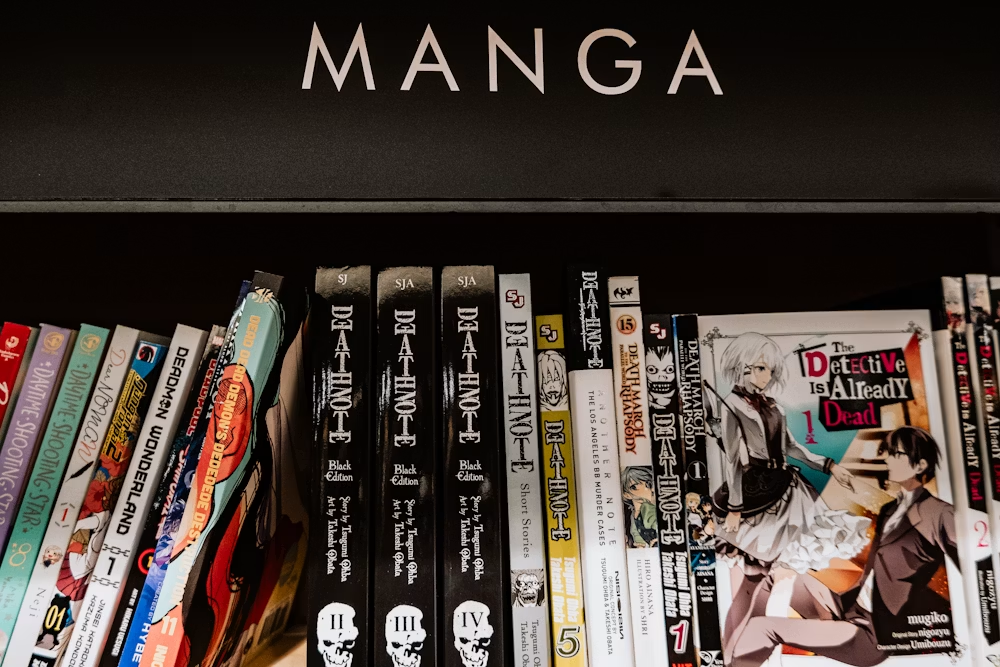
The manga industry has grown into a truly global business, and 2026 is one of the most welcoming years yet for new creators who want to be published. Manga is no longer made only in Japan. Publishers in the United States, Europe, and across Asia are actively hunting for fresh voices, distinctive art styles, and stories that mix cultural perspectives while still honoring the pacing, paneling, and emotion that define the medium.
For aspiring mangaka, writers, and illustrators, the hardest part is rarely talent. The real challenge is knowing where to submit and how to approach each publisher correctly. Many creators quit before they start because they assume every publisher is closed to unsolicited work. That is not true. A growing number of manga publishers, digital platforms, and literary magazines review new submissions every year, as long as creators follow the guidelines and present their work professionally. Artists who enjoy detailed panel work can also explore adjacent markets, since many children’s publishers seeking illustration submissions welcome the same visual storytelling skills that manga demands.
This guide covers the manga publishers accepting submissions in 2026, what each one is looking for, how the submission process actually works, and the practical steps that separate accepted pitches from ignored ones.
The State of Manga Publishing in 2026
Manga publishing in 2026 is more open and more competitive at the same time. Traditional Japanese houses remain difficult to break into, but the rise of original English-language manga (often called OEL or global manga), dedicated original imprints, and digital-first platforms has created more legitimate entry points than ever before.
Several trends are shaping how publishers evaluate submissions this year:
- Rising demand for original English-language manga aimed at Western readers
- A shift toward digital and serialized releases before any print run
- Genuine openness to international creators regardless of location or language background
- Strong interest in cross-genre storytelling such as fantasy romance, science fiction drama, and horror slice of life
- A move toward periodic “open submission windows” rather than year-round acceptance
Publishers now weigh consistency, storytelling clarity, and audience awareness just as heavily as raw artistic skill. A creator who understands who their story is for, and who can deliver chapters on a schedule, is often more attractive than a brilliant artist with no plan.
What Manga Publishers Look for in Submissions
Before you send anything, it helps to understand what editors are actually judging. Most manga publishers review submissions against a handful of core factors:
- A strong storytelling structure with clear pacing and a hook in the first few pages
- Consistent, readable artwork where panels flow naturally and action is easy to follow
- Original characters with enough depth to carry a long-running series
- Clear genre positioning so the editor immediately knows where the book fits on a shelf
- Professional presentation, including a clean synopsis, correct file formats, and a respectful cover note
Some publishers want a finished one-shot. Others prefer sample chapters plus a series outline. A few will only look at a full pitch packet. Reading each publisher’s requirements before you submit is not optional, and ignoring those requirements is the fastest way to get passed over.
VIZ Media and VIZ Originals
VIZ Media is one of the largest manga publishers in the English language, and its VIZ Originals imprint exists specifically to develop Western talent. In 2026, VIZ Originals continues to accept both one-shots and pitches for ongoing series through its official portal.
For a one-shot, VIZ generally asks for a complete manga of roughly 20 to 50 pages. For a series pitch, they typically want at least 10 pages of black and white sequential art along with a series summary and a proposed outline. Because VIZ has enormous distribution power, competition here is high, but the imprint was built to find new creators, which makes it a serious target. You can review the current requirements on VIZ Media’s official submissions page before you prepare your packet.
Seven Seas Entertainment
Seven Seas Entertainment has a reputation for being more approachable than the largest legacy houses. In 2026, the publisher continues to review original manga submissions, with a particular appetite for stories that resonate with English-speaking readers.
Genres they tend to welcome include:
- Fantasy and adventure
- Romance and character-driven drama
- Slice of life
- LGBTQ+ themed stories
Seven Seas values clear storytelling, expressive art, and characters that connect emotionally. If your work sits comfortably in one of their established categories, it is worth studying their catalog closely so your pitch feels like a natural fit rather than a gamble.
TOKYOPOP Original Manga Program
TOKYOPOP has championed original English-language manga for years, and its submission programs remain active in 2026. The publisher is known for imprints such as its LoveLetter line, which focuses on stories aimed at female and young adult readers, and it continues to emphasize “Own Voices” storytelling.
A typical TOKYOPOP submission includes a full pitch packet: a one-page synopsis, detailed character bios, and at least 10 to 20 pages of finished, lettered artwork. They are especially interested in culturally diverse perspectives that still respect manga conventions, so a distinct voice paired with polished craft goes a long way here.
Kodansha and Selective International Programs
Kodansha is one of the most respected names in the industry. Through selective international initiatives and occasional submission calls, it sometimes reviews work from global creators. Editors here favor creators who genuinely understand traditional manga layout, panel rhythm, and pacing.
They generally look for:
- One-shot concepts with a strong central idea
- Short serialized pilots
- Character-driven narratives with series potential
Acceptance rates are low, and much of Kodansha’s original development still happens in Japan, so treat this as a long-term aspiration rather than a first stop. Even so, being read by an editor at this level is valuable feedback in itself.
Yen Press and Original Projects
Yen Press primarily publishes licensed manga and light novels, but it does consider original projects under specific conditions. Unsolicited submissions are limited, so most original work reaches them through:
- Anthology calls and special projects
- Agent-represented pitches
- Concepts that clearly align with their existing catalog
If you aim for Yen Press, your work needs to be both professionally presented and commercially viable, and having representation or an existing relationship helps considerably. If you would rather not chase an agent first, it is worth knowing there are also book publishers accepting submissions without agents, which can be a friendlier starting point for unrepresented creators.
Saturday AM
Saturday AM is an international shonen manga anthology founded in North Carolina, and it has become one of the most creator-friendly on-ramps in the industry. As a digital-first publisher that also produces print anthologies, it actively looks for unique shonen and seinen stories from creators of every background.
Saturday AM runs an annual “Summer of Manga” one-shot competition, which gives new mangaka a concrete way to get their foot in the door. Because the anthology is built around diversity and community, it is an excellent target for creators who want visibility and mentorship rather than a single make-or-break pitch. You can explore its lineup and submission calls at the Saturday AM website.
MediBang Manga Creators Program
MediBang is one of the most accessible platforms for manga submissions in 2026. Its global reach and digital-first approach make it appealing for independent artists who want to publish quickly and build a readership.
MediBang supports:
- Serialized manga released chapter by chapter
- Contest-based submissions with cash prizes and industry exposure
- Digital publishing that reaches readers worldwide
It is a smart choice for creators who want to prove an audience exists before pursuing a traditional print deal.
Silent Manga Audition and International Contests
The Silent Manga Audition is one of the best known international manga contests, and it has a track record of launching creators toward professional careers, including opportunities connected to Japanese publishing. Because entries rely on visual storytelling with little or no dialogue, the contest rewards artists who can carry emotion and plot through paneling alone.
Contests like this, along with WEBTOON’s regular creator competitions, are valuable even if you do not win. They force you to finish a complete, polished piece on a deadline, and a strong contest entry becomes an instant portfolio sample you can reuse for other submissions.
Literary Magazines That Accept Manga and Graphic Work
Beyond dedicated manga publishers, a number of literary magazines accept manga and graphic storytelling, which offers creators exposure and credibility. If your strength leans toward richly illustrated pages, several art book publishers accepting submissions are another route for showcasing image-driven work. These outlets often publish:
- Short manga stories and one-shots
- Experimental visual narratives
- Graphic essays and illustrated fiction
Submitting to literary magazines helps you sharpen your craft, collect publishing credits, and get on the radar of editors and agents. For many working mangaka, a magazine was the first place their work ever appeared in print.
Why Literary Magazines Matter for Manga Creators
Literary magazines play a quiet but important role in the manga ecosystem. They tend to be more open to experimental work and emerging talent, which makes them ideal for creators who are still refining their style.
The benefits are practical:
- Lower submission barriers than major publishers
- Faster editorial feedback you can actually learn from
- Portfolio-building credits that add legitimacy to future pitches
- Greater visibility among editors and agents scouting new voices
How Western Reflections Publishing Helps You Get Submission Ready
Getting your manga accepted is often less about talent and more about presentation, and that is where preparation matters. Many creators have a compelling idea but struggle to shape it into the tight, professional package that editors expect. Strengthening the story and the pitch before you submit can be the difference between a fast rejection and a real conversation.
This is where working with a publishing partner pays off. If your dialogue needs tightening, your pacing needs work, or your proposal needs structure, professional book editing services can help your manga feel cohesive and submission ready. Story problems that hurt a pitch, such as a slow opening or an unclear arc, are exactly what developmental editing services are designed to fix. For creators who want end to end guidance, book publishing services can help you navigate submission standards, and novel writing services can support the narrative side of a series bible when the plot needs to hold up across many volumes.
Common Submission Mistakes to Avoid
Even skilled creators get rejected over avoidable errors. The most common mistakes in 2026 include:
- Submitting unfinished or inconsistent artwork
- Ignoring a publisher’s specific submission guidelines
- Sending overly long or unfocused proposals
- Failing to define a clear genre and target reader
- Writing a vague or spoiler-free synopsis that hides the actual story
A synopsis should tell the editor how the story ends, not tease it. Taking the time to prepare your submission properly can dramatically improve your odds.
Recommended Submission Materials for Manga Creators
Requirements vary, but most publishers and magazines expect some combination of the following:
| Submission Material | Purpose |
| Sample manga pages | Demonstrates art style and panel flow |
| Story synopsis | Shows narrative direction, including the ending |
| Character profiles | Highlights the depth and range of the cast |
| Series outline | Signals long-term storytelling potential |
| Creator bio | Establishes professionalism and background |
Preparing these materials in advance means you can submit with confidence the moment an open window appears.
How to Improve Your Chances of Acceptance
To stand out in 2026, focus on creativity and professionalism in equal measure. Strategies that consistently help include:
- Studying recently published manga in your genre to understand current expectations
- Getting honest feedback on your pages before you submit
- Keeping dialogue natural, concise, and true to each character
- Maintaining consistent visual quality across every page you send
- Staying open to editorial revisions rather than defending every choice
Persistence matters more than most creators expect. Rejection is normal, even for gifted artists, and the ones who eventually break through are usually the ones who kept improving and kept submitting. To ground your expectations, it helps to understand the medium itself, and resources like this overview of what manga is and how it developed can sharpen your sense of the form.
The Role of Digital Manga in 2026
Digital platforms have reshaped the entire industry. Many publishers now prefer creators who are comfortable with digital tools, serialized releases, and building an online readership. A digital-first hit can lead to:
- A print deal once demand is proven
- International licensing across multiple territories
- Adaptations into anime, games, or other media
For new creators, digital publishing is no longer a fallback. It is a legitimate and often faster starting point that lets your work find readers while you keep pitching to larger houses.
Final Thoughts
Manga publishing in 2026 offers real, reachable opportunities for creators who approach the process professionally. From major imprints like VIZ Originals and TOKYOPOP to community-driven anthologies like Saturday AM, contests like the Silent Manga Audition, and open literary magazines, there are more pathways into the industry than at any point before.
A smart, realistic strategy is to build experience through magazines and contests, prove an audience through digital platforms, polish your pitch until it is undeniable, and then approach the publishers that fit your genre. The key ingredients are patience, preparation, and belief in your story. Your manga deserves to be seen, so make sure it is presented in a way editors cannot ignore.
Frequently Asked Questions
This guide is one part of Publishers Accepting Submissions in 2026, our full directory sorted by genre, format and country.
